
Optical window materials used in high-end infrared imaging, aerospace sensors, and extreme-environment photonic systems must simultaneously satisfy contradictory requirements: high optical transparency, extreme mechanical strength, and thermal stability under harsh conditions.
Materials such as diamond, zinc sulfide (ZnS), and silicon carbide (SiC) represent three of the most important classes of advanced optical windows. However, their exceptional hardness and chemical stability also make them extremely difficult to process using conventional techniques.
Traditional machining methods—mechanical polishing, chemical etching, or nanosecond laser ablation—often introduce thermal damage, microcracks, and residual stress, which significantly degrade optical performance.
In contrast, femtosecond laser processing has emerged as a disruptive enabling technology, offering a fundamentally different interaction mechanism based on ultrafast, non-thermal energy deposition.
Why Femtosecond Lasers Are Fundamentally Different
Femtosecond laser pulses operate on the order of 10⁻¹⁵ seconds, which is significantly shorter than the electron–phonon relaxation time in most solids.
This ultrashort interaction leads to several key advantages:
- Energy is deposited before heat diffusion occurs
- Material removal is dominated by nonlinear ionization rather than melting
- Thermal affected zones are nearly eliminated
- High spatial precision at micro- and nanoscale becomes possible
As a result, femtosecond lasers enable what is often referred to as “cold ablation,” making them uniquely suitable for ultra-precision structuring of hard and brittle materials.
Diamond: From Ultra-Hard Material to Functional Microstructure Platform
Diamond is widely recognized for its unmatched hardness, exceptional thermal conductivity, and optical transparency across a wide spectral range. These properties make it ideal for high-power optical windows, thermal management substrates, and radiation-resistant components.
However, its extreme chemical stability and hardness also make conventional machining extremely challenging, often leading to graphitization or subsurface damage.
Femtosecond laser processing has significantly changed this limitation.
Recent developments show that diamond can now be structured into:
- High aspect-ratio microchannels for thermal management systems
- Microgroove arrays for X-ray emission sources
- Microporous structures for microfluidic and sensing devices
One notable advancement is the fabrication of sub-20 μm diameter micro-holes in thin diamond plates (~170 μm thickness), achieving aspect ratios around 10:1 while maintaining controlled taper geometries.
These results demonstrate that diamond is no longer only a passive optical window material but is increasingly becoming a micro-engineered functional platform for high-performance devices.
Zinc Sulfide (ZnS): Functionalizing Infrared Windows via Surface Microstructures
ZnS is a key infrared-transmitting material widely used in mid- and long-wave IR optical systems, including thermal imaging and missile guidance windows.
However, its optical performance is strongly influenced by surface reflections and scattering losses.
Femtosecond laser processing, especially when combined with structured beam shaping (such as Bessel beams), enables precise surface functionalization.
Recent studies have demonstrated:
- Large-area micro/nanostructure arrays that reduce Fresnel reflection
- High-aspect-ratio nanochannels for photonic devices
- Biomimetic “moth-eye-like” surfaces for broadband anti-reflection
In some cases, engineered ZnS surfaces achieved significant reflectance reduction (from over 40% down to below 15%), while simultaneously improving infrared imaging clarity.
More importantly, these structures are not just geometric modifications — they actively enhance optical performance, transforming ZnS from a passive window material into a structured optical interface material.
Silicon Carbide (SiC): Bridging Power Electronics and Optical Engineering
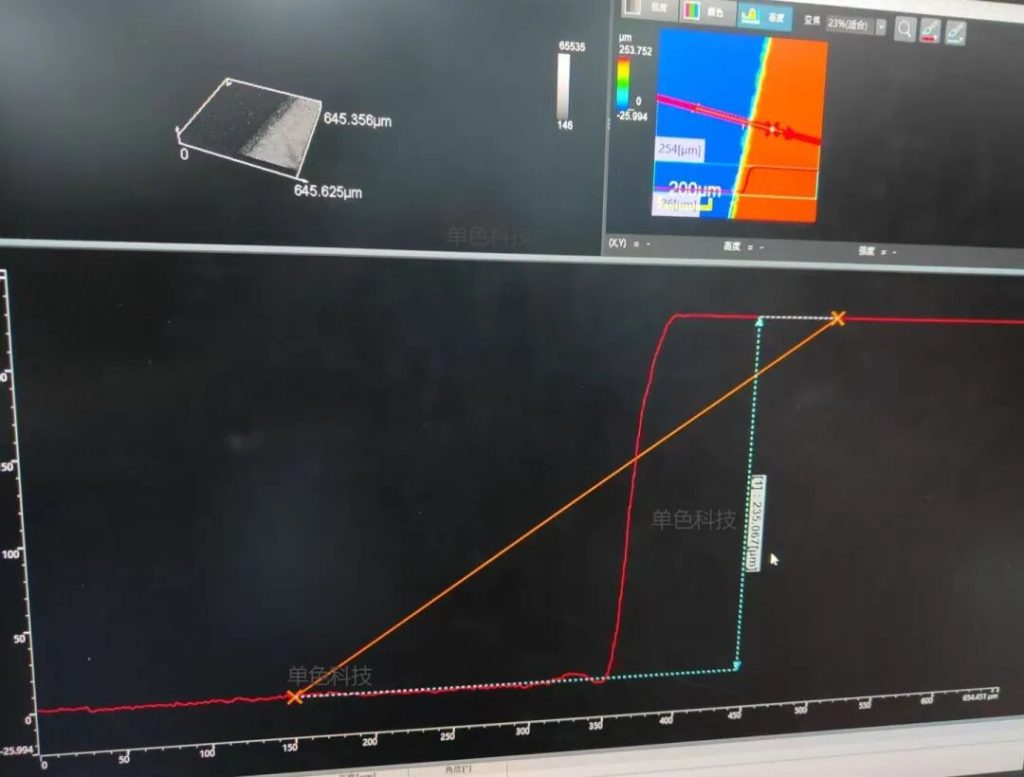
Silicon carbide occupies a unique position among advanced materials due to its combination of:
- High thermal conductivity
- High mechanical hardness
- Excellent chemical stability
- Wide bandgap semiconductor properties
While SiC is best known for power electronics applications, it is increasingly used in optical windows and harsh-environment photonic systems.
However, its chemical inertness makes it extremely difficult to pattern using wet etching or conventional lithography.
Femtosecond laser processing provides a viable alternative, enabling:
- Precise surface ablation with minimal thermal damage
- Laser-induced phase modification layers
- Controlled internal modification for subsurface structuring
Recent experimental work has demonstrated that by tuning pulse energy and scanning strategies, it is possible to induce localized ionization and controlled structural modification inside SiC.
These engineered features can enhance optical collection efficiency and open pathways toward applications in:
- High-temperature optical sensors
- Quantum photonic devices
- Integrated photonic-electronic systems
From Machining to Functional Design: A Paradigm Shift
Across diamond, ZnS, and SiC, a common trend is emerging:
Femtosecond laser processing is no longer just a fabrication tool — it is becoming a functional design platform.
This shift is characterized by:
- Moving from surface shaping → to volumetric modification
- Moving from single-feature machining → to large-area micro/nano patterning
- Moving from structural fabrication → to optical and thermal function engineering
In other words, geometry is no longer just geometry — it is now a method of controlling light, heat, and electronic behavior.
Future Outlook: Toward Multi-Functional Optical Windows
Looking forward, femtosecond laser processing is expected to play an increasingly important role in next-generation optical systems.
Key development directions include:
- Scalable fabrication of large-area nanostructured optical surfaces
- Integration of optical + thermal + electronic functions in a single material
- Hybrid processing combining ultrafast lasers with AI-driven optimization
- Application expansion into space optics, quantum sensing, and high-power photonics
As processing precision continues to improve, optical window materials will evolve from passive protective components into actively engineered functional interfaces.
Conclusion
Diamond, ZnS, and SiC represent three extreme material systems where traditional machining approaches face fundamental limitations.
Femtosecond laser technology provides a breakthrough solution by enabling non-thermal, ultra-precise, and highly controllable material modification.
More importantly, it is reshaping the role of optical window materials—from simple transmission elements to engineered functional components in advanced photonic and energy systems.