
Ion implantation is one of the most critical processes in semiconductor manufacturing. It enables precise control of electrical properties by introducing dopant ions such as boron (B), phosphorus (P), and arsenic (As) into semiconductor materials.
By accelerating high-energy ions and implanting them into the crystal lattice, ion implantation defines key device characteristics, including junction depth, conductivity, and threshold voltage. It is a fundamental step in forming PN junctions and is widely used in logic, memory, and power semiconductor devices.
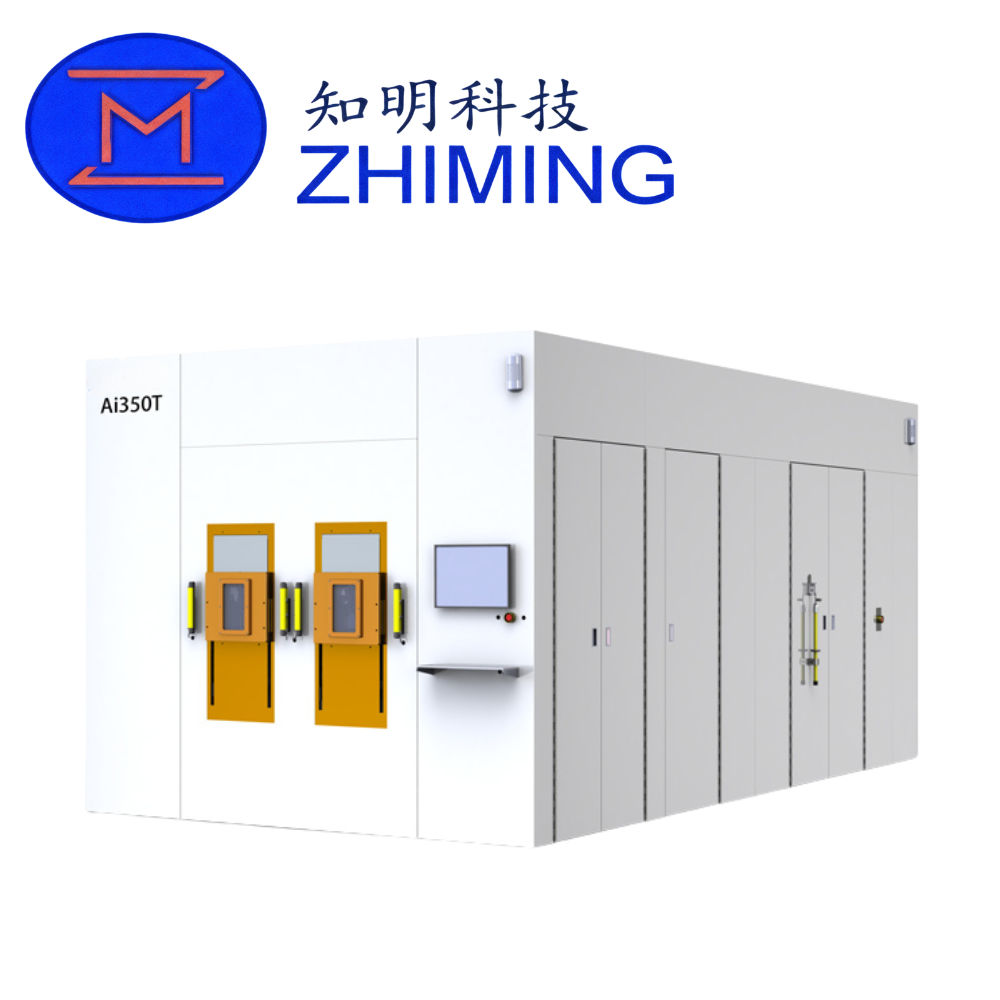
Ion Implantation Process
The ion implantation process involves several key stages:
- Ion Generation
Dopant gases or solid sources are ionized in the ion source to generate charged particles. - Ion Acceleration
The ions are accelerated to a defined energy level, which determines the implantation depth. - Mass Analysis
A magnetic analyzer selects the desired ion species, ensuring beam purity. - Beam Scanning and Implantation
The ion beam is scanned across the wafer surface to achieve uniform implantation.
After implantation, the wafer typically undergoes annealing to repair lattice damage and activate dopants. Common annealing methods include:
- Rapid Thermal Processing (RTP) at 1000–1100°C
- Laser annealing for localized heating and reduced thermal budget
Classification of Ion Implantation Equipment
By Energy Level
Low Energy Ion Implanters (<100 keV)
Used for ultra-shallow junctions, source/drain implantation, and advanced logic devices such as AI chips, CPUs, DRAM, and CIS.
Medium Energy Ion Implanters (100–300 keV)
Used for threshold voltage adjustment, lightly doped drain structures, and processes such as SIMOX and Smart Cut.
High Energy Ion Implanters (>300 keV)
Used for deep implantation in power devices, RF chips, and optical communication devices, enabling micrometer-level doping depth.
By Beam Current
Low Current Implanters (100 nA – 100 μA)
Suitable for precision applications requiring accurate dose control.
Medium Current Implanters (100 μA – 2000 μA)
Widely used in standard semiconductor manufacturing processes.
High Current Implanters (2 mA – 30 mA)
Designed for high-dose, high-throughput applications such as source/drain implantation.
Ultra-High Current Implanters (>30 mA)
Used in specialized high-volume or high-dose production environments.
By Special Function
Oxygen Ion Implanters
Used for SOI (Silicon-on-Insulator) fabrication.
Hydrogen Ion Implanters
Applied in Smart Cut and material engineering processes.
High Temperature Ion Implanters
Enable implantation at elevated temperatures for materials such as SiC and advanced semiconductor applications.
System Architecture
An ion implantation system typically consists of five major subsystems:
Gas System
Provides and safely handles specialty gases such as arsine (AsH₃), phosphine (PH₃), and boron trifluoride (BF₃).
Power and Electrical System
Supplies high-voltage power for ion acceleration and magnetic field generation.
Vacuum System
Maintains high vacuum conditions to reduce ion scattering and contamination, typically using turbo pumps and cryogenic pumps.
Control System
Manages beam parameters, wafer handling, and process automation.
Beamline System
The core of the equipment, including:
- Ion source
- Extraction system
- Mass analyzer
- Acceleration tube
- Beam scanning system
- Process chamber
This system determines implantation accuracy, uniformity, and overall performance.
Market Overview
According to industry data, the global ion implantation equipment market reached approximately RMB 20.6 billion in 2022. The Chinese market accounted for around RMB 6.6 billion, representing about 32 percent of the global market.
In terms of segmentation:
- High current implanters dominate the market, accounting for approximately 61 percent
- Medium current implanters account for about 20 percent
- The remaining share is held by high energy and specialized systems
Global Competitive Landscape
The ion implantation equipment market is highly concentrated and dominated by a few leading international companies.
Applied Materials
Holds more than 50 percent of the global market share. Its portfolio includes high current, medium current, and ultra-high dose ion implantation systems. The company strengthened its position through the acquisition of Varian Semiconductor.
Axcelis Technologies
A leading supplier of high energy ion implanters, with approximately 55 percent market share in this segment. The company reported strong financial performance and continues to expand in power semiconductor applications.
Nissin Ion Equipment
Focuses on medium current ion implanters and has participated in several semiconductor projects in China.
Sumitomo Heavy Industries
Primarily produces medium current ion implantation systems.
SEN Corporation
Offers a full range of ion implantation equipment, including high current, medium current, and high energy systems, though with relatively lower market share in mainland China.
Development of Domestic Manufacturers
In recent years, Chinese semiconductor equipment manufacturers have made significant progress. For example, a 12-inch low temperature ion implanter developed by a domestic company has been successfully delivered to a leading logic chip manufacturer.
Local companies are actively developing high current, medium current, and high energy ion implantation systems. Although the domestic market is still dominated by international suppliers, Chinese manufacturers are gradually achieving process validation and entering advanced production lines.
Conclusion
Ion implantation remains a core technology in semiconductor manufacturing, directly impacting device performance and yield. With the rapid development of advanced nodes, wide bandgap materials such as SiC, and high-performance computing applications, demand for advanced ion implantation equipment continues to grow.
While the global market is still led by established international players, ongoing technological advancements and localization efforts are reshaping the competitive landscape, especially in emerging semiconductor markets.