
Silicon carbide (SiC) has become one of the most important materials in next-generation power electronics. It enables higher voltage, higher temperature, and higher efficiency devices compared with traditional silicon. However, behind these advantages lies a harsh reality: SiC chips are extremely difficult and expensive to manufacture at scale.
Unlike conventional silicon processing, SiC manufacturing involves extreme temperatures, ultra-hard materials, and tight process windows. Even minor instability in equipment can lead to crystal defects, wafer breakage, or yield loss.
This article breaks down the entire SiC production chain through a structured 20+ equipment Q&A framework, explaining why this material is so challenging to turn into reliable semiconductor devices.
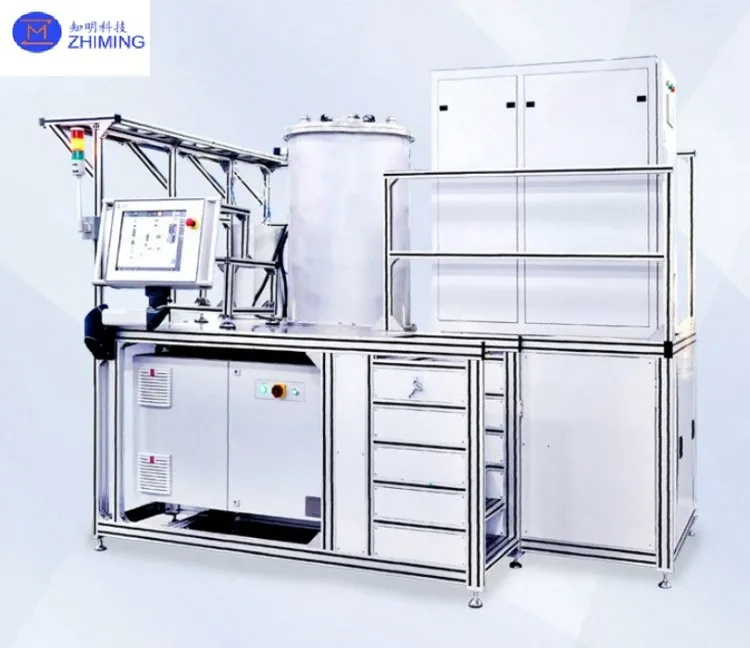
1. SiC Manufacturing Overview: Two Major Stages
SiC device manufacturing is generally divided into two major stages:
- Crystal growth and wafer processing
- Device fabrication and packaging
Each stage requires highly specialized equipment operating under extreme physical conditions.
2. Why SiC Crystal Growth Is So Difficult
Unlike silicon, SiC cannot be grown from a simple melt. It requires sublimation-based growth at extremely high temperatures (>2000°C). This creates multiple engineering challenges.
Q1: What are the key SiC crystal growth equipment systems?
- SiC powder synthesis furnace
- SiC single crystal growth furnace
- Diamond multi-wire saw
- Grinding and polishing machines
Q2: Why is SiC powder synthesis so difficult?
Key challenges include:
- Ultra-high temperature stability
- Vacuum sealing reliability
- Precise thermal control
- Chemical reaction uniformity
Even small deviations in temperature or pressure can alter powder purity, directly affecting crystal quality.
Q3: Why is SiC crystal growth furnace technology so complex?
Main difficulties include:
- Large-size high-temperature furnace design
- Stable vacuum environment above 2000°C
- Crucible material selection (graphite-based systems)
- Precise gas flow control
- Thermal field uniformity management
Any instability leads to:
- Polycrystalline defects
- Dislocations
- Yield loss in wafers
3. Wafer Cutting and Processing: Mechanical Limits of SiC
8
SiC is one of the hardest semiconductor materials, second only to diamond in hardness. This makes mechanical processing extremely challenging.
Q4: Why is diamond wire sawing difficult for SiC?
Key technical issues:
- Wire tension instability
- Cutting vibration control
- Slurry particle wear
- Heat accumulation during slicing
If not controlled properly:
- Edge chipping increases
- Internal microcracks form
- Wafer strength decreases
Q5: What makes SiC grinding difficult?
Challenges include:
- Hardness leads to slow material removal
- Surface damage layer formation
- Residual stress accumulation
- Severe wafer warpage after thinning
Q6: Why is SiC polishing more complex than silicon?
Polishing challenges:
- High rigidity causes uneven pressure distribution
- Thermal deformation of polishing pads
- Difficulty achieving atomic-level flatness
- Subsurface damage removal is harder
4. Device Fabrication: Extreme Thermal and Plasma Conditions
8
After wafer preparation, SiC device fabrication introduces another layer of complexity: extreme thermal and plasma processing environments.
Q7: What equipment is used in SiC device fabrication?
- SiC epitaxy reactors
- Dry etching systems
- High-temperature ion implanters
- High-temperature annealing furnaces
- Oxidation furnaces
- Backside grinding systems
Q8: Why is SiC epitaxy difficult?
Key challenges:
- High temperature growth environment
- Gas flow instability
- Interface defect control
- Thickness uniformity over 200mm wafers
Q9: What makes SiC plasma etching difficult?
Issues include:
- Strong chemical resistance of SiC
- Chamber corrosion from aggressive plasma
- Low etch rate compared to silicon
- Process instability under high energy plasma
Q10: Why is ion implantation more difficult for SiC?
SiC requires:
- High-temperature implantation
- Deep dopant activation annealing
Challenges:
- Dopant activation efficiency is low
- Crystal damage recovery is difficult
- Equipment must withstand extreme thermal cycles
Q11: Why is high-temperature annealing critical?
Annealing must repair implantation damage, but:
- Requires ultra-high temperature stability
- Rapid thermal cycling can cause wafer cracking
- Uniform heating is difficult on large wafers
5. Back-End Processing: Yield Determines Profit
Q12: Why is backside thinning difficult?
Problems include:
- Thickness control at micron level
- Microcrack formation
- Stress-induced wafer warpage
- Fragile wafer handling after thinning
Q13: Why does SiC wafer warpage happen more than silicon?
Because:
- Higher intrinsic stress
- Stronger lattice rigidity
- Uneven material removal during grinding
Q14: Why is wafer handling extremely risky?
Thin SiC wafers are:
- Brittle
- Stress-sensitive
- Easy to fracture during automation transfer
Even minor vibration can lead to catastrophic yield loss.
6. System-Level Challenge: 20+ Equipment Must Work Together
A complete SiC production line requires more than 20 types of precision equipment working in sync:
- Crystal growth furnaces
- Wire saw systems
- Grinding machines
- Polishing systems
- Epitaxy reactors
- Etching systems
- Ion implantation tools
- Annealing furnaces
- Oxidation furnaces
- Back grinding systems
The real challenge is not just individual machines—but process integration stability across the entire chain.
7. Why SiC Manufacturing Is So Expensive
Key cost drivers:
1. Extreme equipment requirements
- High temperature (>2000°C systems)
- High vacuum environments
- Corrosion-resistant materials
2. Low yield rates
- Defect sensitivity
- Wafer breakage risk
- Process variability
3. Slow throughput
- Hard material slows all mechanical steps
4. High R&D intensity
- Continuous process optimization required
Conclusion
SiC chips are difficult to manufacture not because of a single bottleneck, but because every stage—from crystal growth to final wafer thinning—pushes current semiconductor equipment to its physical and engineering limits.
The combination of:
- extreme temperature processing
- ultra-hard material behavior
- tight defect tolerance
- multi-step process complexity
makes SiC one of the most challenging semiconductor materials in mass production today.
However, as equipment technology evolves—especially in crystal growth control, laser-assisted processing, and advanced etching systems—SiC is gradually becoming more scalable, enabling its rapid adoption in EVs, renewable energy systems, and high-voltage power electronics.