
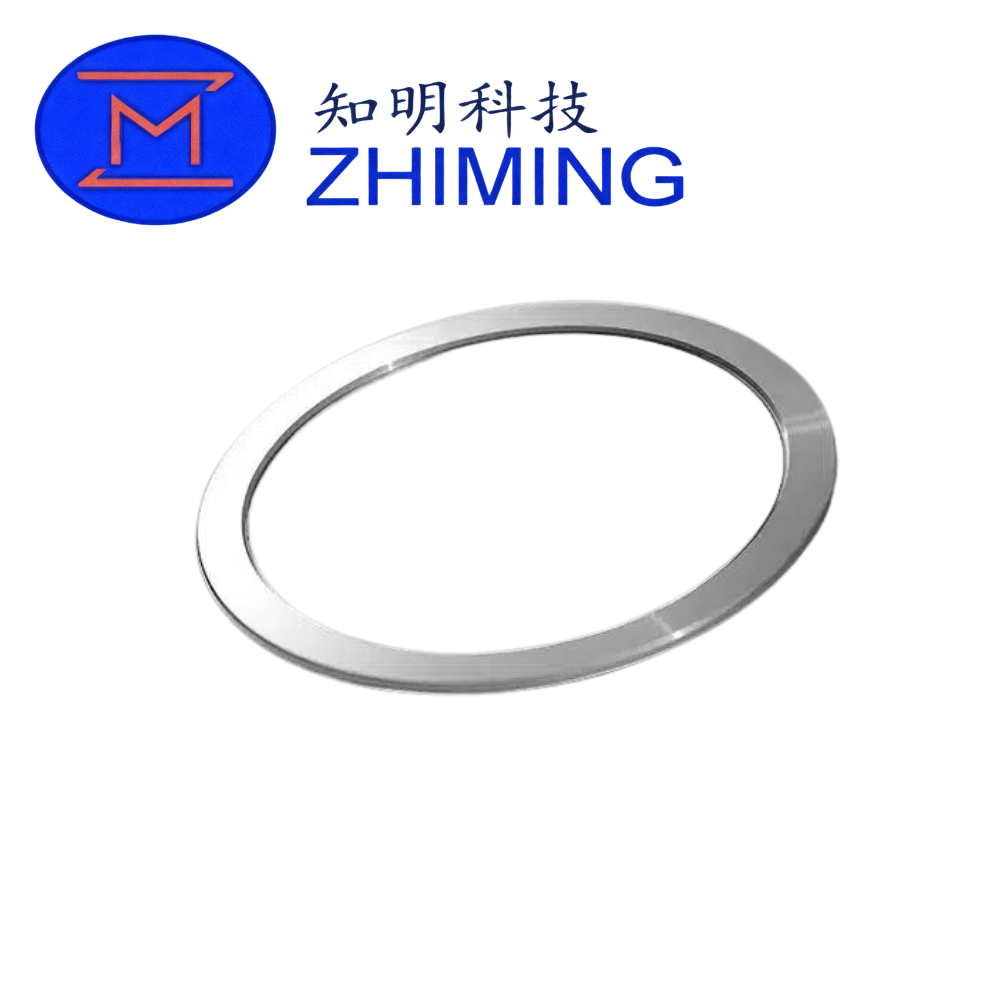
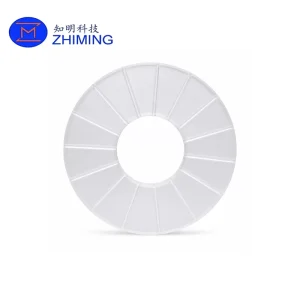
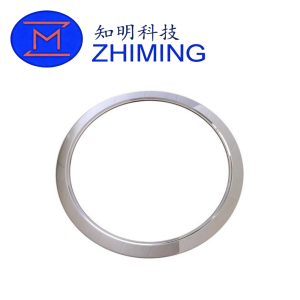
 The SiC ring (Silicon Carbide Ring) is a high-performance component widely used in semiconductor plasma processing equipment, particularly in etching and deposition chambers. Manufactured using Chemical Vapor Deposition (CVD) Silicon Carbide, this product offers exceptional resistance to plasma erosion, high temperature, and aggressive chemical environments.
In semiconductor manufacturing, chamber components are continuously exposed to reactive gases such as fluorine- and chlorine-based chemistries (CF₄, SF₆, Cl₂), as well as high-energy ion bombardment. Under such conditions, traditional silicon components tend to degrade more rapidly. In contrast, SiC rings provide significantly enhanced durability, reduced particle generation, and improved process stability.
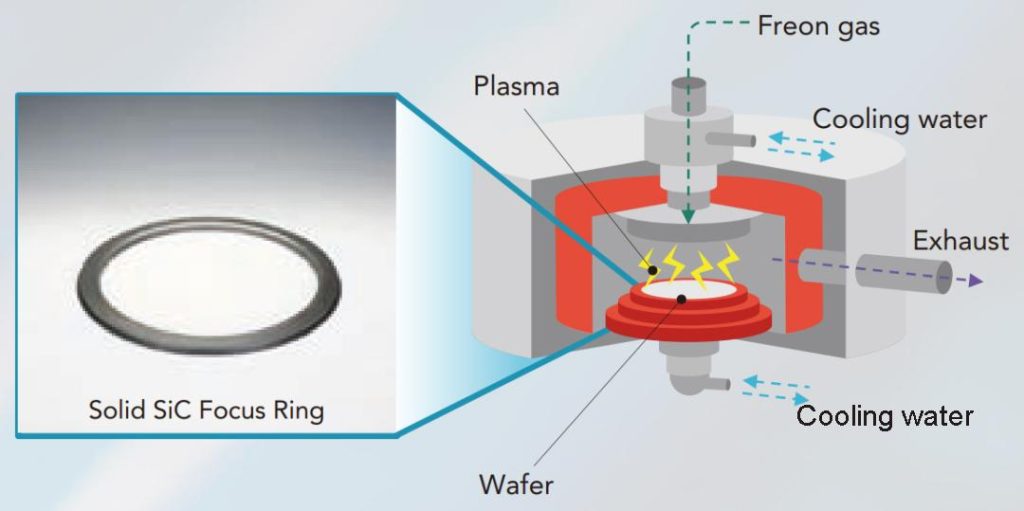
Thanks to its outstanding mechanical strength, thermal conductivity, and chemical inertness, CVD SiC is considered one of the most reliable materials for next-generation semiconductor equipment. SiC rings are typically installed as focus rings, edge rings, or chamber protection rings, helping to control plasma distribution and protect critical chamber parts.
These rings are classified as critical semiconductor consumables, offering a much longer service life compared to conventional silicon rings, making them ideal for advanced process nodes and high-throughput manufacturing environments.
Key Features
- High Purity CVD SiC Material: Ensures excellent structural integrity and minimal contamination
- Outstanding Plasma Resistance: Superior resistance to fluorine and chlorine-based plasma
- High Temperature Stability: Maintains performance in high-temperature processing environments
- Low Particle Generation: Improves wafer yield and process cleanliness
- Extended Lifetime: Typically several times longer than silicon components
- Precision Machining: Tight tolerances (<10 μm) for seamless integration into semiconductor tools
Technical Specifications
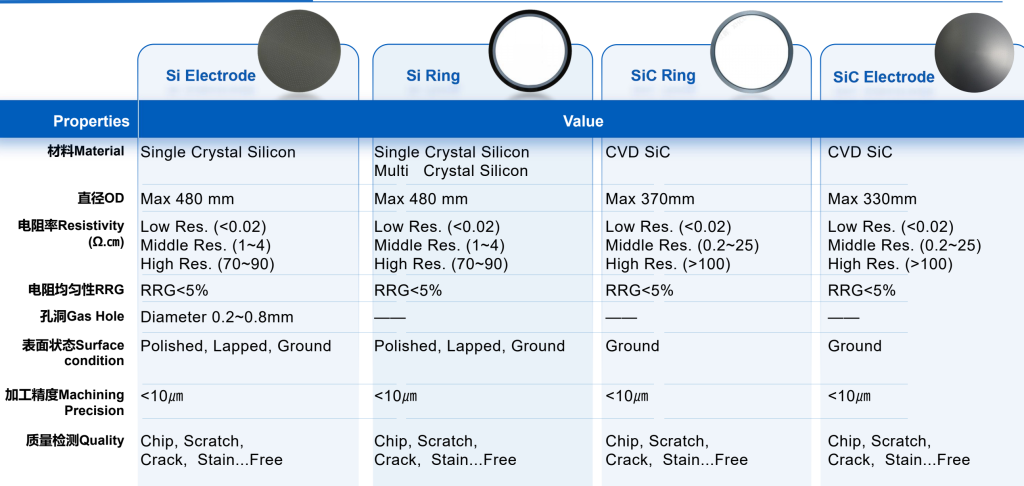
| Parameter | Specification |
|---|---|
| Material | CVD Silicon Carbide (SiC) |
| Purity | ≥ 99.9% |
| Density | ≥ 3.1 g/cm³ |
| Diameter (Max) | Up to 370 mm |
| Thickness | Custom (typically 5–30 mm) |
| Resistivity (Low) | < 0.02 Ω·cm |
| Resistivity (Medium) | 0.2 – 25 Ω·cm |
| Resistivity (High) | > 100 Ω·cm |
| Resistivity Uniformity (RRG) | < 5% |
| Surface Condition | Ground (polishing available upon request) |
| Surface Roughness (Ra) | ≤ 1.6 μm (customizable) |
| Machining Precision | < 10 μm |
| Thermal Conductivity | ~120–200 W/m·K |
| Hardness | ~9.2 Mohs |
| Quality Control | Free of cracks, chips, contamination |
Applications
SiC rings are essential components in semiconductor equipment where durability and plasma resistance are critical:
- Plasma etching systems (ICP / RIE)
- Chemical vapor deposition (CVD / PECVD)
- Focus ring / edge ring applications
- Chamber liner and protection components
- High-density plasma processing environments
They are especially suitable for advanced nodes and harsh etching processes, where silicon components cannot meet lifetime requirements.
Why Choose SiC Ring Over Silicon Ring?
Compared to traditional silicon rings, SiC rings offer a significant improvement in service life and process stability. While silicon rings are more cost-effective initially, they wear faster under aggressive plasma conditions and require more frequent replacement.
SiC rings, on the other hand, provide:
- 3–10× longer lifetime
- Better resistance to chemical corrosion
- Lower particle contamination
- Reduced downtime and maintenance cost
For high-end semiconductor manufacturing, the total cost of ownership (TCO) is often lower when using SiC components despite their higher upfront cost.
FAQ
Q1: Is the SiC ring a consumable product?
Yes, it is considered a critical semiconductor consumable. Although it has a longer lifespan than silicon parts, it will eventually wear under plasma exposure.
Q2: What is the advantage of CVD SiC material?
CVD SiC provides extremely high purity, dense structure, and excellent resistance to plasma and chemicals, making it ideal for semiconductor applications.
Q3: Can the SiC ring be customized?
Yes. Diameter, thickness, resistivity, and surface finishing can all be customized based on your drawings or equipment requirements.
Q4: How long does a SiC ring last compared to a silicon ring?
Typically, SiC rings last 3–10 times longer depending on process conditions.
Q5: What is the lead time?
Production usually takes 4–8 weeks depending on design complexity and quantity.
Request a Quote for CVD Silicon Carbide SiC Ring for Semiconductor Plasma Etching
Tell us your required specifications, dimensions, quantity, application and technical requirements. You can also provide drawings or additional project information. Our technical team will review your requirements and reply as soon as possible.

Reviews
There are no reviews yet.