
As the semiconductor industry continues shifting toward high-volume manufacturing on 300mm wafers, dicing has become one of the most critical—and increasingly complex—back-end processes. Compared to smaller wafers, 300mm substrates introduce higher mechanical stress, tighter tolerances, and greater yield risk, especially when processing advanced materials like silicon carbide (SiC), sapphire, and ultra-thin silicon.
This guide explains the real engineering challenges behind 300mm wafer dicing and provides practical, production-proven solutions—aligned with current industry practices and equipment capabilities.
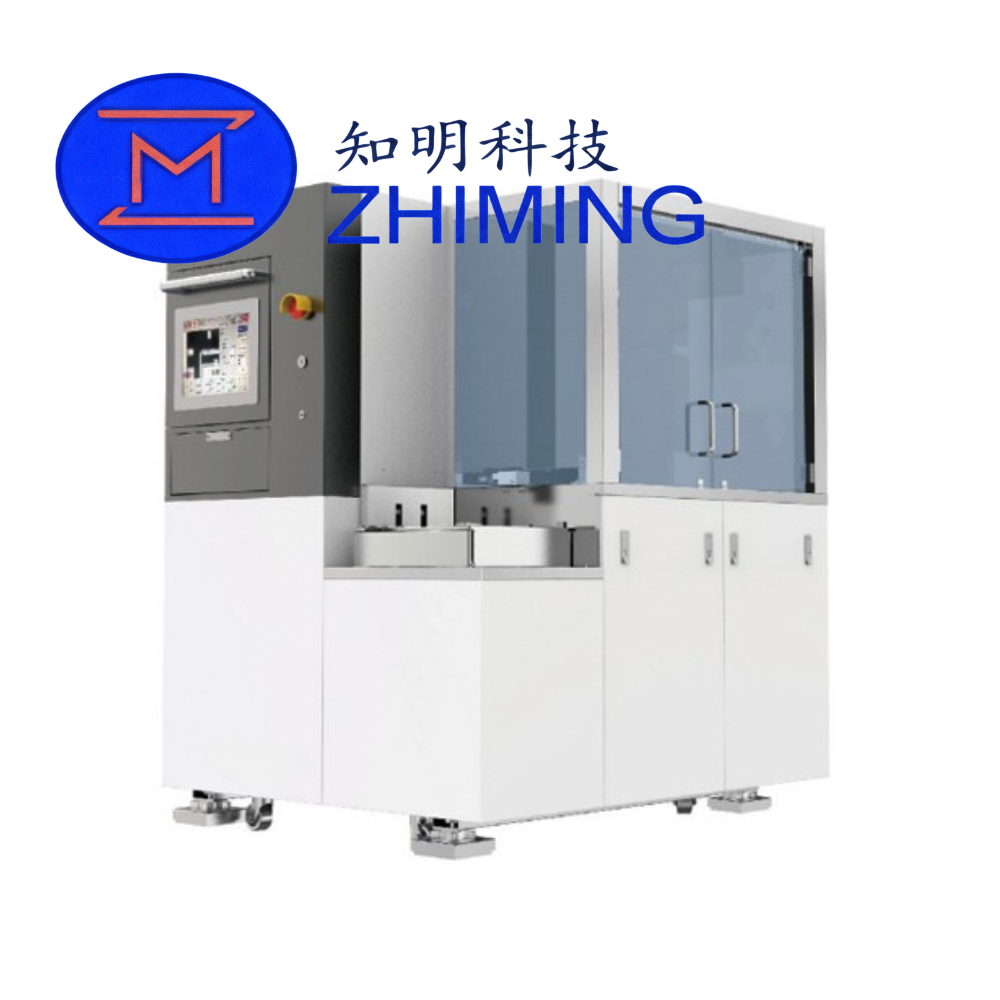
What Is 300 mm Wafer Dicing?
Wafer dicing is the process of separating a processed semiconductor wafer into individual dies using:
- Blade dicing (mechanical sawing)
- Laser dicing
- Stealth dicing (laser-induced internal modification)
For 300 mm wafers, this step must maintain:
- Micron-level precision
- Minimal chipping
- High throughput consistency
Key Challenges in 300 mm Wafer Dicing
1. Wafer Warpage and Mechanical Stability
Larger wafers are inherently more prone to warpage due to:
- Film stress accumulation
- Thermal expansion mismatch
- Backside thinning
Impact:
- Uneven cutting depth
- Blade deviation
- Increased die cracking
Solution:
- Use high-rigidity vacuum chucks with adaptive leveling
- Implement real-time height sensing systems
- Optimize tape mounting to reduce stress distribution
2. Ultra-Thin Wafer Handling
Modern wafers are often thinned to <100 µm, especially in advanced packaging.
Risks:
- Wafer breakage during handling
- Vibration-induced defects
- Tape deformation
Solution:
- UV-release dicing tape for controlled die pickup
- Temporary bonding (carrier wafers)
- Low-vibration spindle systems
3. Edge Chipping and Microcracks
Hard and brittle materials (SiC, sapphire) significantly increase the risk of:
- Edge chipping
- Subsurface microcracks
- Die strength degradation
Solution:
- Use ultra-thin diamond blades (20–50 µm)
- Optimize spindle speed and feed rate
- Introduce multi-step cutting (rough + fine)
- Consider laser dicing for brittle materials
4. Thermal Damage and Heat Management
Dicing generates localized heat, especially at high spindle speeds.
Problems:
- Thermal stress
- Die warping
- Reduced device reliability
Solution:
- High-efficiency coolant delivery systems
- Optimized slurry flow to remove debris and heat
- Laser dicing with minimal heat-affected zone (HAZ)
5. Throughput vs Precision Trade-off
Manufacturers face constant pressure to increase throughput without sacrificing yield.
Conflict:
- Higher speed → more defects
- Higher precision → lower productivity
Solution:
- AI-assisted process optimization
- Automatic blade wear monitoring
- Parallel multi-spindle systems
Dicing Technology Comparison
| Technology | Best For | Advantages | Limitations |
|---|---|---|---|
| Blade Dicing | Silicon, general use | Mature, cost-effective | Mechanical stress |
| Laser Dicing | SiC, sapphire | No blade wear, high precision | Higher equipment cost |
| Stealth Dicing | Advanced thin wafers | Minimal surface damage | Complex process control |
Material-Specific Considerations
Silicon (Si)
- Relatively easy to dice
- Focus on throughput and cost optimization
Silicon Carbide (SiC)
- Extremely hard and brittle
- Requires laser or specialized blades
Sapphire
- High fracture risk
- Needs precise parameter control
Process Optimization Best Practices
To achieve high yield in 300 mm wafer dicing:
- ✔ Optimize blade exposure and dressing frequency
- ✔ Match feed speed with material hardness
- ✔ Use high-quality dicing tapes
- ✔ Maintain clean coolant systems
- ✔ Monitor spindle vibration and runout
Industry Trends (2026)
- Increasing adoption of laser and hybrid dicing
- Growth of AI-driven process control
- Rising demand for SiC and compound semiconductor dicing
- Integration with advanced packaging workflows
Conclusion
300 mm wafer dicing is no longer a simple mechanical separation step—it is a precision-critical process that directly impacts yield, reliability, and cost.
Manufacturers that succeed in this stage typically:
- Combine advanced equipment + optimized process parameters
- Adapt to material-specific challenges
- Invest in automation and real-time monitoring
As wafer sizes remain at 300 mm and materials become more complex, dicing technology will continue to evolve toward higher precision, lower damage, and smarter process control.