


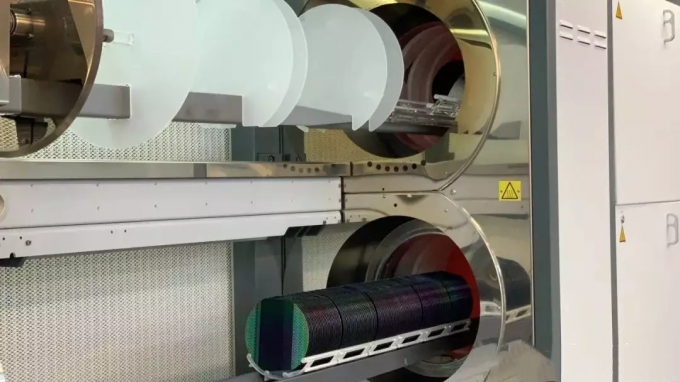
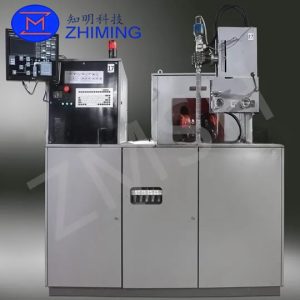
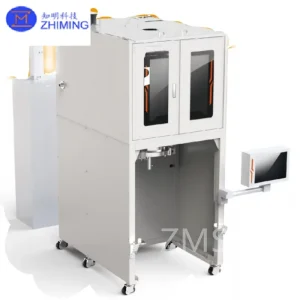
The 6/8/12-Inch LPCVD Oxidation Furnace is a state-of-the-art semiconductor manufacturing tool designed for precise and uniform thin-film deposition. It is widely applied in growing high-quality polysilicon, silicon nitride, and silicon oxide layers on wafers, ensuring consistent performance for power semiconductors, advanced substrates, and other high-precision applications.
This equipment combines advanced low-pressure deposition technology, intelligent temperature control, and ultra-clean process design to achieve exceptional thin-film uniformity and high throughput. Its vertical reactor configuration allows efficient batch processing, while its thermal deposition process avoids plasma-induced damage, making it ideal for critical processes such as gate dielectric formation, stress-buffering layers, and protective oxides.
Key Advantages
- High Uniformity Thin-Film Deposition: Low-pressure environment (0.1–10 Torr) ensures wafer-to-wafer and within-wafer uniformity of ±1.5%, critical for high-performance device fabrication.
- Vertical Reactor Design: Handles 150–200 wafers per batch, improving throughput and production efficiency for industrial-scale semiconductor fabrication.
- Thermal Deposition Process (500–900°C): Provides gentle, plasma-free deposition to protect sensitive substrates and maintain high film quality.
- Intelligent Temperature Control: Real-time monitoring and adjustment with ±1°C accuracy for stable, repeatable results.
- Ultra-Clean Process Chamber: Minimizes particle contamination, supporting SiC and other advanced wafer materials.
- Customizable Configuration: Flexible design accommodates various process requirements, including dry or wet oxidation and different wafer sizes.
Technical Specifications
| Feature | Specification |
|---|---|
| Wafer Size | 6/8/12 Inch |
| Compatible Materials | Polysilicon, Silicon Nitride, Silicon Oxide |
| Oxidation Type | Dry Oxygen / Wet Oxygen (DCE, HCL) |
| Process Temperature Range | 500°C–900°C |
| Constant Temperature Zone | ≥800 mm |
| Temperature Control Accuracy | ±1°C |
| Particle Control | <15 EA (>0.32μm), <60 EA (>0.32μm), <80 EA (>0.226μm) |
| Film Thickness | NIT1500 ±50 Å |
| Uniformity | Within wafer <2.5%, wafer-to-wafer <2.5%, batch-to-batch <2% |
Product Features
- Automated wafer handling ensures high safety and operational efficiency.
- Ultra-clean process chamber reduces contamination risk and maintains consistent film quality.
- Superior film thickness uniformity supports advanced node manufacturing.
- Real-time intelligent temperature and pressure control allows precise process adjustments.
- SiC wafer support reduces friction and particle generation, extending wafer lifetime.
- Modular design enables customization for diverse applications and process needs.
Deposition Process Principle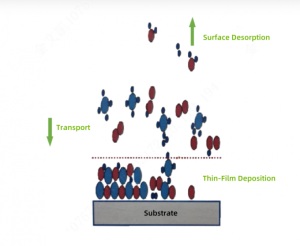
- Gas Introduction: Reactant gases are introduced into the tube under low-pressure conditions (0.25–1 Torr).
- Surface Diffusion: Molecules freely diffuse across the wafer surface, ensuring uniform coverage.
- Adsorption: Reactants adhere to the wafer surface before chemical reaction.
- Chemical Reaction: Thermal decomposition forms the desired thin film directly on the substrate.
- Byproduct Removal: Non-reactive gases are evacuated to maintain purity and prevent interference.
- Film Formation: Reaction products gradually accumulate, forming a uniform, stable thin-film layer.
Applications
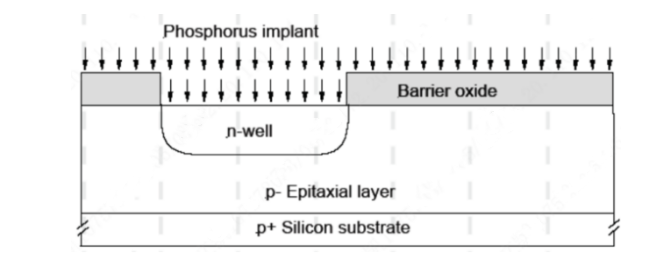
- Shielding Oxide Layer: Protects silicon wafers from contamination and reduces ion channeling during doping processes.
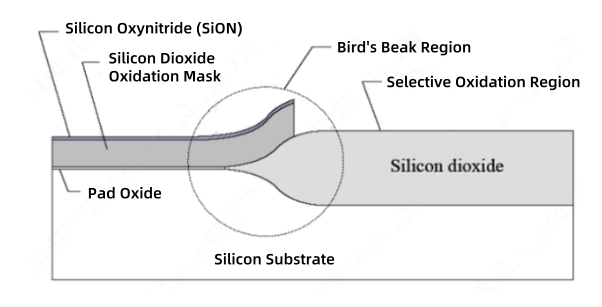
- Pad Oxide Layer: Acts as a stress buffer between silicon and silicon nitride layers, preventing wafer cracking and improving yield.
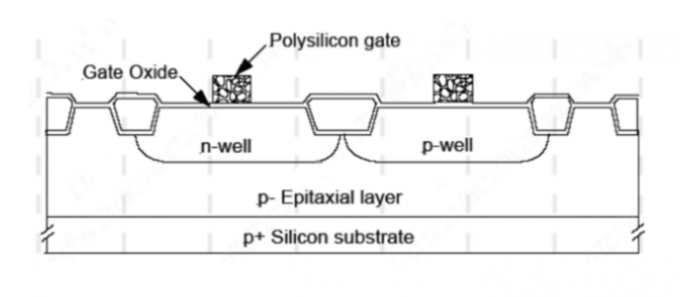
- Gate Oxide Layer: Provides the dielectric layer in MOS structures, ensuring precise current conduction and field-effect control.
System Configurations
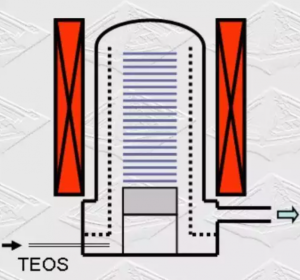
- Vertical LPCVD: Process gases flow from top to bottom, achieving uniform deposition on all wafers in a batch.
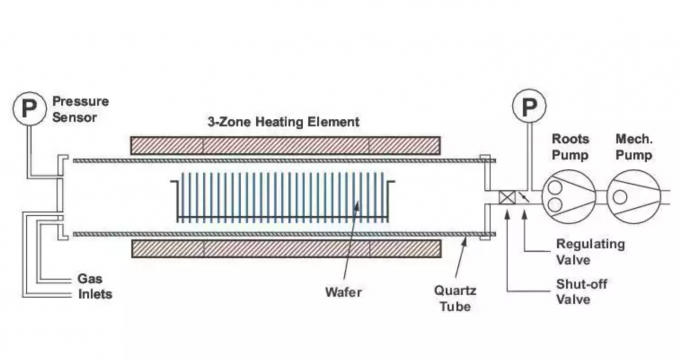
- Horizontal LPCVD: Gases flow along the length of the substrates, suitable for continuous, high-volume production, though deposition thickness may vary slightly near the inlet side.
Frequently Asked Questions
Q1: What is LPCVD primarily used for?
A: LPCVD is a low-pressure thin-film deposition process widely used in semiconductor manufacturing for polysilicon, silicon nitride, and silicon oxide deposition, enabling uniform and high-quality films for advanced device fabrication.
Q2: How does LPCVD differ from PECVD?
A: LPCVD relies on thermal activation under low pressure to produce high-purity films, while PECVD uses plasma at lower temperatures for faster deposition, often with slightly lower film quality.
Q3: What wafer sizes and materials are compatible with this LPCVD Oxidation Furnace?
A: This furnace supports 6-inch, 8-inch, and 12-inch wafers and is compatible with polysilicon, silicon nitride, silicon oxide, and SiC wafers, providing flexibility for various semiconductor applications.
Q4: Can the LPCVD Oxidation Furnace be customized for specific processes?
A: Yes, the system offers modular configurations, including adjustable temperature zones, gas flow control, and oxidation modes (dry or wet), allowing it to meet diverse process requirements for both research and industrial-scale production.

Reviews
There are no reviews yet.