
Abstract
Crystal growth furnaces are critical equipment in semiconductor manufacturing, directly impacting the structural integrity, electrical performance, and yield of semiconductor wafers. By precisely controlling temperature gradients, growth rates, and ambient conditions, these furnaces determine crystal quality, defect density, and doping uniformity. This article provides a detailed overview of how different types of crystal growth furnaces affect wafer properties, the physical principles behind their operation, and the considerations engineers should make when selecting furnace systems for high-performance semiconductor production.
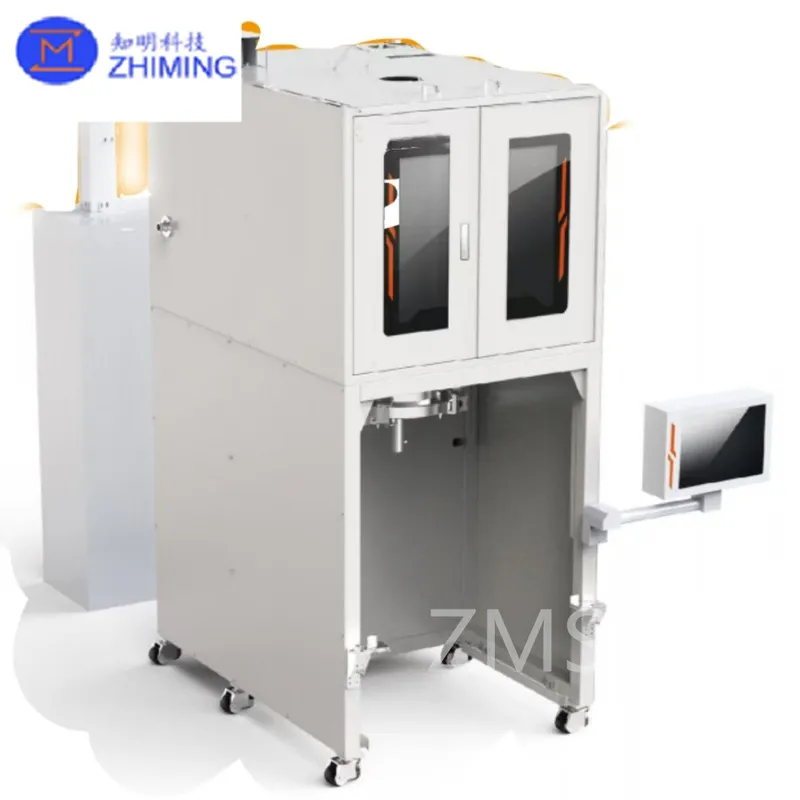
The Role of Crystal Growth Furnaces in Semiconductor Manufacturing
Crystal growth furnaces serve as the foundation for producing monocrystalline wafers from raw semiconductor materials such as silicon, silicon carbide, or gallium arsenide. The furnace environment directly influences the crystalline structure, defect density, and overall homogeneity of the wafer. Even minor fluctuations in temperature or ambient conditions can introduce dislocations, vacancies, or stress within the crystal lattice, potentially compromising downstream device performance. Understanding the critical parameters of furnace operation is therefore essential for ensuring consistent wafer quality.
Temperature Control and Gradient Management
One of the most important factors in wafer quality is precise temperature control. Crystal growth furnaces, whether using the Czochralski (CZ), Bridgman, or Edge-Defined Film-Fed Growth (EFG) method, rely on stable thermal environments to maintain uniform crystal formation. Non-uniform temperature gradients can lead to variations in lattice spacing, causing mechanical stress, warping, or defects such as micropipes in silicon carbide wafers. Advanced furnaces employ multi-zone heating and real-time monitoring to minimize thermal fluctuations and ensure controlled solidification rates.
Atmosphere and Contamination Control
The ambient environment within the furnace is equally critical. Impurities in the furnace atmosphere, such as oxygen or moisture, can be incorporated into the growing crystal, altering its electrical properties and reducing yield. Modern crystal growth furnaces use high-purity inert gases, vacuum environments, or controlled chemical vapor deposition atmospheres to prevent contamination. Gas flow patterns, pressure stabilization, and filtration systems are carefully engineered to maintain crystal integrity across the entire wafer.
Growth Rate and Mechanical Stability
The speed at which the crystal is drawn or solidified has a direct influence on defect formation. Rapid growth can trap vacancies or interstitial atoms, while excessively slow growth may lead to impurity segregation or non-uniform doping. Furnace design must balance thermal management, mechanical stability, and precise motion control to achieve the optimal growth rate. Rotary mechanisms, vibration damping, and automated feedback loops are common features in high-end furnaces to maintain mechanical precision throughout the process.
Furnace Type and Material-Specific Considerations
Different crystal growth furnace types are tailored to specific semiconductor materials and wafer sizes. The Czochralski furnace is widely used for silicon wafers due to its ability to produce large-diameter, high-purity crystals. Bridgman furnaces are often employed for compound semiconductors, where directional solidification is required. EFG furnaces are suited for producing thin, uniform wafers for niche applications. Selecting the appropriate furnace involves understanding material properties such as melting point, thermal conductivity, and susceptibility to dislocation formation, ensuring that the final wafer meets stringent specifications.
Impact on Wafer Electrical and Mechanical Properties
The quality of the crystal produced in the furnace directly determines wafer performance in semiconductor devices. High structural uniformity reduces carrier scattering, enhances electron mobility, and improves device reliability. Minimizing defects such as dislocations, micropipes, or inclusions also enhances mechanical stability during wafer handling, cutting, and subsequent processing. Therefore, investment in precise, high-quality crystal growth furnaces translates into higher yield, better device performance, and long-term cost savings in semiconductor fabrication.
Automation and Process Monitoring
Modern semiconductor crystal growth increasingly relies on automation to achieve repeatable quality. Advanced furnaces incorporate real-time temperature sensors, optical monitoring systems, and feedback control algorithms to continuously adjust process parameters. This reduces human error, enables rapid correction of deviations, and allows for consistent production of large-volume, high-purity wafers. Integration with factory automation systems further ensures traceability and process standardization.
Conclusion
Crystal growth furnaces play a pivotal role in determining the quality of semiconductor wafers. Temperature uniformity, atmosphere control, growth rate management, and mechanical stability collectively influence defect density, crystal uniformity, and device performance. Selecting the appropriate furnace type and employing precise process control are essential for achieving high-quality wafers that meet the demanding requirements of modern semiconductor applications. Understanding these principles allows engineers and procurement specialists to optimize production, enhance yield, and ensure reliable semiconductor device performance.