
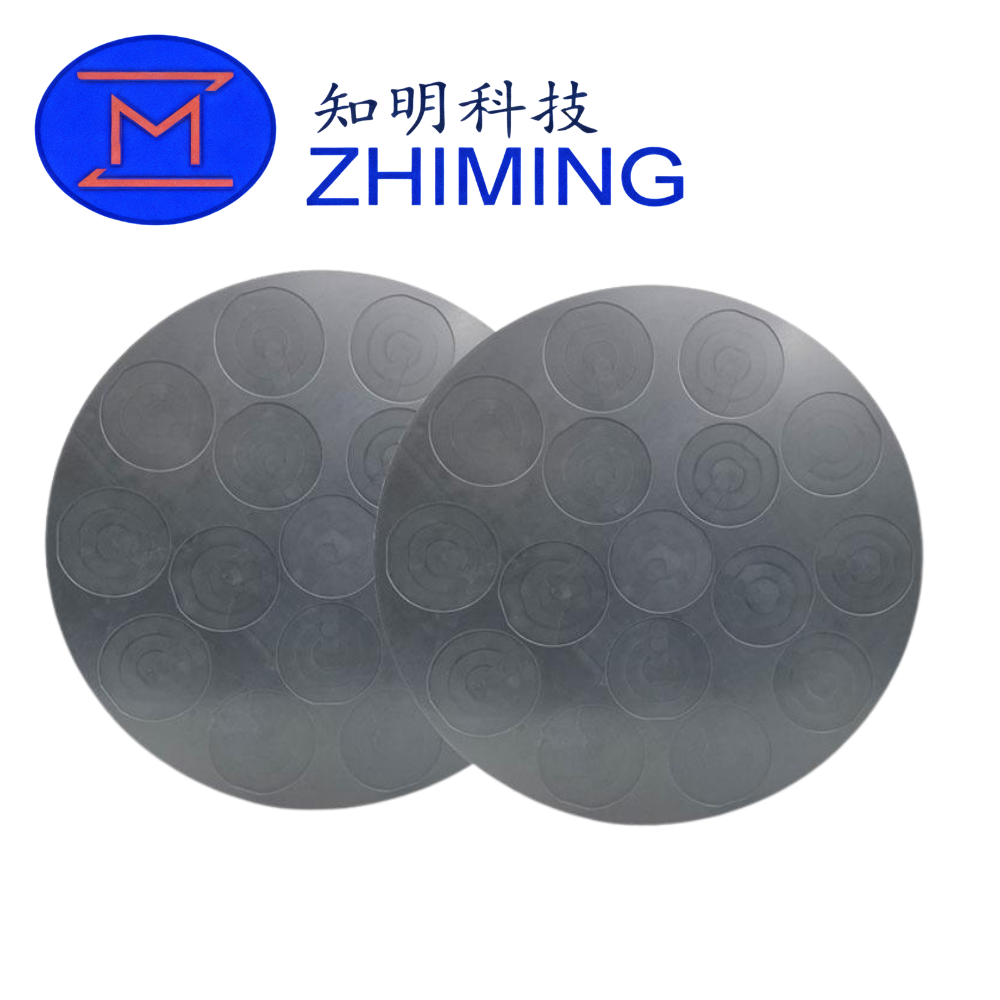
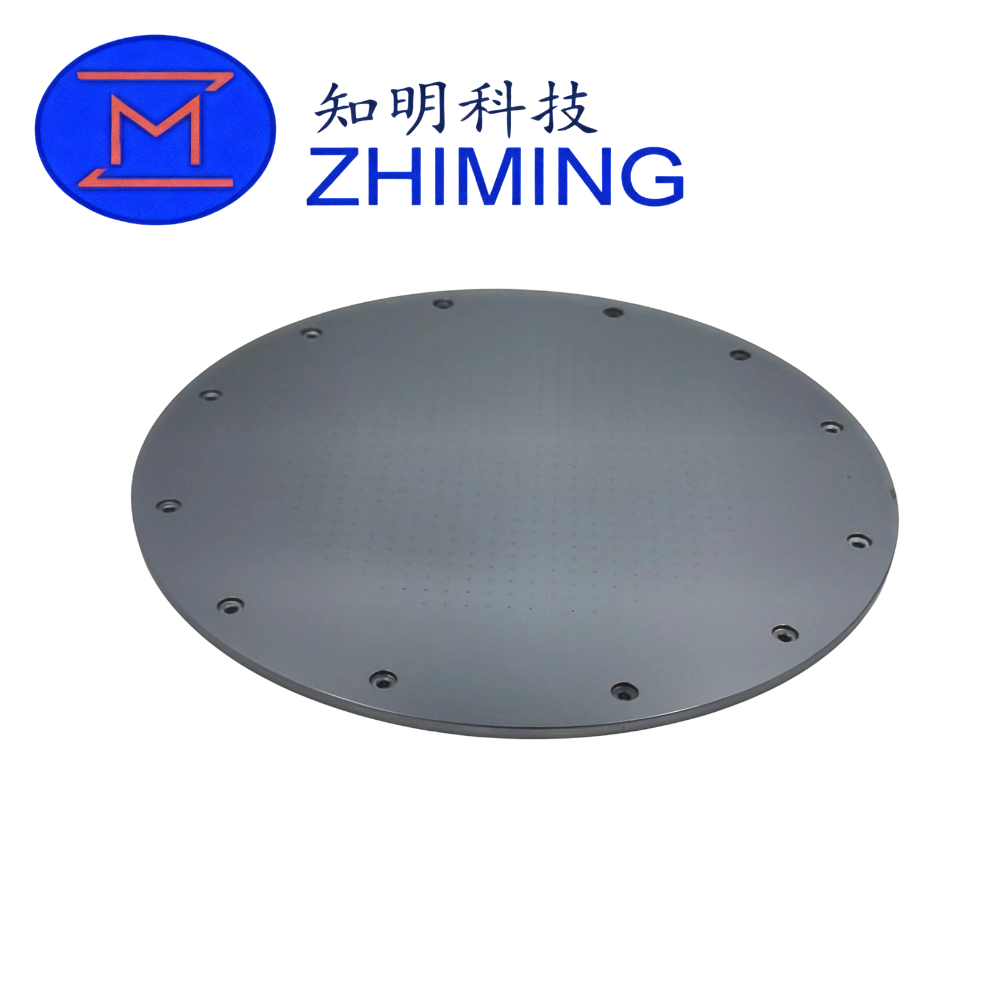
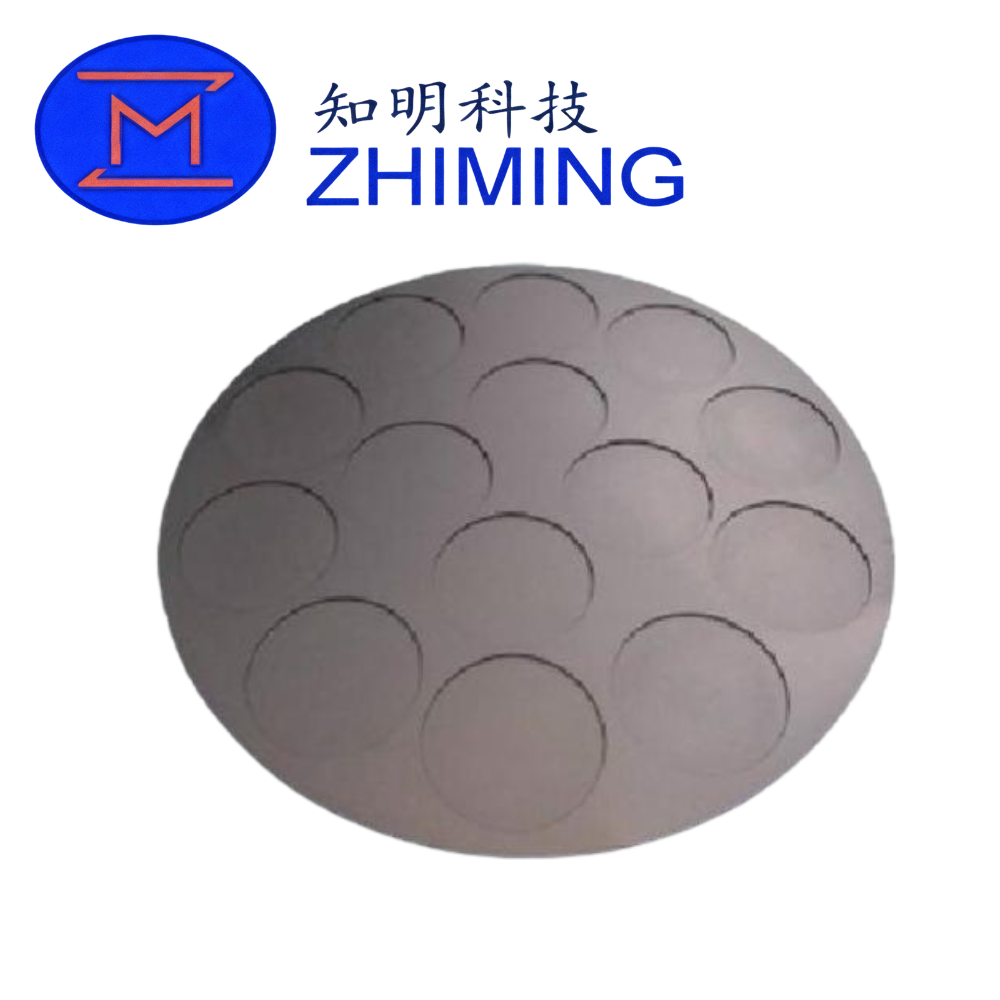
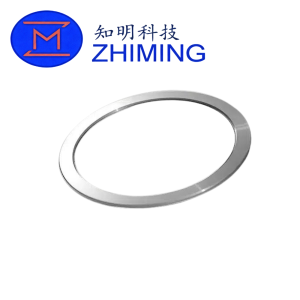
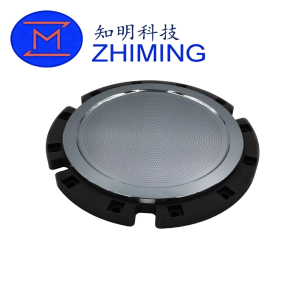
The SiC Electrode (Silicon Carbide Electrode) is a high-performance component designed for advanced semiconductor plasma processing systems, including etching, deposition, and surface treatment equipment. Compared with traditional silicon electrodes, SiC electrodes o ffer significantly enhanced durability, superior plasma resistance, and longer operational lifetime under extreme processing conditions.
Manufactured using Chemical Vapor Deposition (CVD) Silicon Carbide, the electrode features a dense, high-purity structure with excellent thermal conductivity and chemical stability. This makes it particularly suitable for environments involving high-energy plasma, aggressive gases such as CF₄, SF₆, NF₃, and Cl₂, and elevated temperatures.
In plasma chambers, electrodes play a critical role in controlling electric fields, plasma density, and process uniformity. SiC electrodes maintain stable electrical characteristics over extended periods, reducing drift, minimizing particle contamination, and ensuring consistent wafer processing results.
Due to their durability and performance, SiC electrodes are classified as critical semiconductor consumables (long-life wear parts) and are widely used in advanced semiconductor nodes and high-throughput production environments.
Key Features
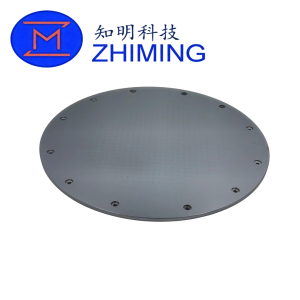
- High Purity CVD SiC Material: Dense structure with excellent chemical inertness
- Superior Plasma Resistance: Outstanding performance in fluorine- and chlorine-based environments
- Ultra-Long Service Life: Typically 3–10× longer than silicon electrodes
- Low Particle Generation: Improves yield and reduces contamination risk
- High Thermal Conductivity: Enhances heat dissipation and process stability
- Stable Electrical Properties: Maintains consistent resistivity over long cycles
- Precision Machining: Tight tolerance (<10 μm) for semiconductor-grade integration
- Custom Gas Distribution Design: Optimized hole patterns for uniform plasma
Technical Specifications
| Parameter | Specification |
|---|---|
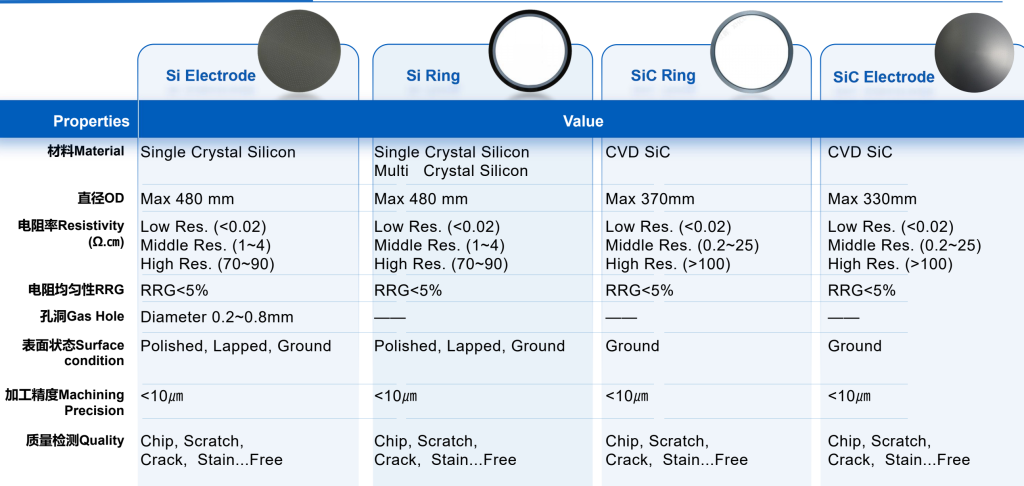
| Material | CVD Silicon Carbide (SiC) |
| Purity | ≥ 99.9% |
| Density | ≥ 3.1 g/cm³ |
| Diameter (Max) | Up to 330 mm |
| Thickness | Custom (typically 5–50 mm) |
| Resistivity (Low) | < 0.02 Ω·cm |
| Resistivity (Medium) | 0.2 – 25 Ω·cm |
| Resistivity (High) | > 100 Ω·cm |
| Resistivity Uniformity (RRG) | < 5% |
| Gas Hole Diameter | 0.2 – 0.8 mm (customizable) |
| Surface Condition | Ground (Polished optional) |
| Surface Roughness (Ra) | ≤ 1.6 μm |
| Machining Precision | < 10 μm |
| Thermal Conductivity | 120 – 200 W/m·K |
| Hardness | ~9.2 Mohs |
| Max Operating Temperature | > 1000°C (process dependent) |
| Quality Control | No cracks, chips, contamination |
Applications
SiC electrodes are widely used in semiconductor processing environments requiring high durability and stability:
- Plasma etching systems (ICP / RIE)
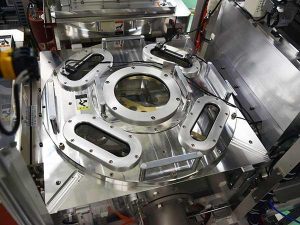
- CVD / PECVD deposition equipment
- High-power plasma systems
- Wafer surface modification processes
- Advanced semiconductor manufacturing nodes
They are particularly suitable for harsh plasma conditions and long production cycles, where conventional silicon electrodes cannot meet lifetime requirements.
Advantages Over Silicon Electrodes
Compared with traditional silicon electrodes, SiC electrodes provide significant performance improvements:
- Extended Lifetime: 3–10 times longer under aggressive plasma conditions
- Superior Corrosion Resistance: Withstands fluorine and chlorine gases
- Lower Particle Contamination: Enhances yield and process cleanliness
- Improved Process Stability: Maintains consistent plasma characteristics
- Reduced Maintenance Cost: Less frequent replacement and downtime
Although the initial cost is higher, SiC electrodes offer a lower total cost of ownership (TCO) in high-end semiconductor applications.
FAQ
Q1: Is the SiC electrode a consumable part?
Yes. It is a critical semiconductor consumable, but with a much longer service life compared to silicon electrodes.
Q2: Why choose SiC over silicon electrode?
SiC offers better plasma resistance, longer lifetime, and lower particle generation, making it ideal for harsh processing environments.
Q3: Can the electrode be customized?
Yes. Size, thickness, resistivity, gas hole design, and surface finish can all be customized according to your requirements.
Q4: What industries use SiC electrodes?
Primarily semiconductor manufacturing, especially in plasma etching and deposition systems.
Reviews
There are no reviews yet.