
Semiconductor manufacturing is one of the most complex and precision-demanding industrial processes in the modern world. From wafer fabrication to packaging, each step requires meticulous control over environmental conditions, material handling, and process parameters. In recent years, automation has become a critical driver for improving efficiency, yield, and reliability in semiconductor equipment. This article explores emerging automation trends, the technological innovations behind them, and their impact on modern semiconductor manufacturing.
The Need for Automation in Semiconductor Manufacturing
Semiconductor devices have grown increasingly sophisticated, incorporating smaller feature sizes, higher transistor densities, and complex architectures. Manual or semi-automated operations are no longer sufficient to meet the high standards of precision and throughput required by today’s industry. Automation provides multiple advantages:
- Improved Precision and Consistency: Automated systems reduce human error, ensuring uniform handling of wafers, precise alignment, and consistent process control.
- Enhanced Throughput: High-volume production demands rapid processing. Automation enables continuous operation, reducing bottlenecks in wafer slicing, etching, lithography, and packaging.
- Cost Efficiency: While initial investment in automation can be high, the long-term reduction in labor costs, scrap, and downtime significantly offsets expenses.
- Data Integration and Process Optimization: Automated equipment often incorporates sensors and real-time monitoring, allowing for data-driven process optimization and predictive maintenance.
Key Automation Trends
1. Fully Automated Wafer Handling and Alignment
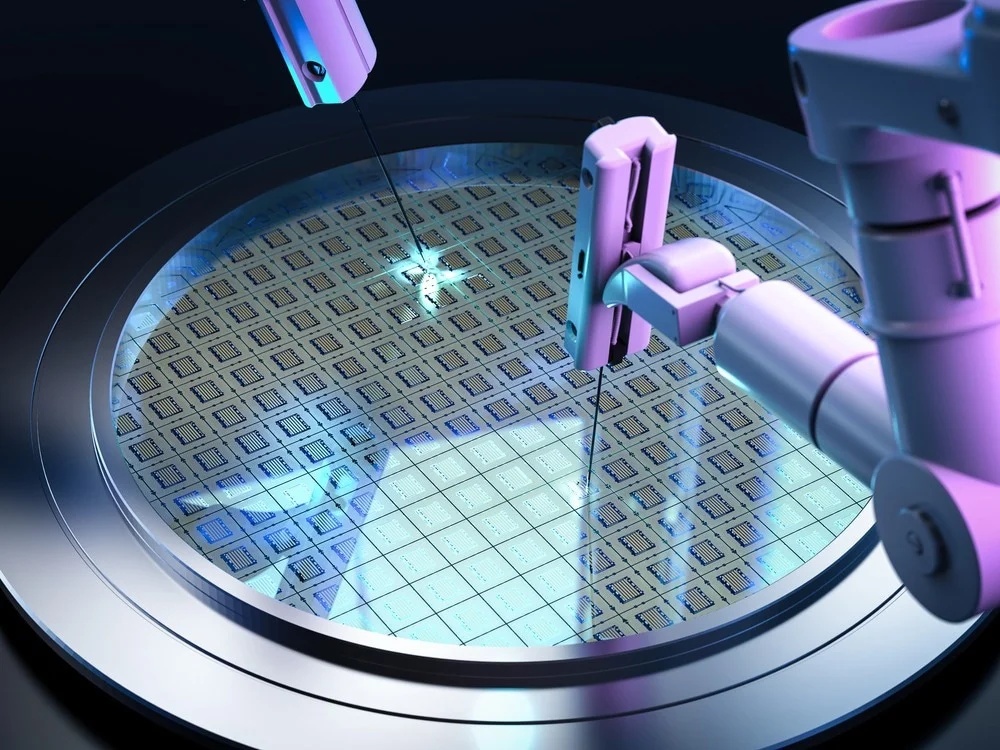
Wafer handling is critical in minimizing contamination, avoiding mechanical damage, and ensuring precise positioning during processes such as lithography, etching, or deposition. Emerging automated wafer handling systems now incorporate robotic arms, vacuum grippers, and real-time vision systems to achieve micron-level alignment accuracy. Advanced systems can handle wafers continuously across multiple process modules with minimal human intervention.
2. Integration of AI and Machine Learning
Artificial intelligence (AI) and machine learning (ML) are increasingly embedded in Halbleiterausrüstung. AI algorithms analyze process data, predict potential defects, and dynamically adjust process parameters. This results in improved yields, reduced scrap rates, and more stable production performance. For example, AI-driven predictive maintenance can preemptively identify tool wear or contamination risks, avoiding costly downtime.
3. Modular and Flexible Automation Systems
Modern semiconductor fabs demand flexible production lines to accommodate multiple wafer sizes, device types, and process recipes. Modular automation allows equipment to be reconfigured quickly, enabling manufacturers to switch between product lines without significant downtime. This flexibility also supports R&D environments where rapid prototyping and experimental processes are common.
4. IoT-Enabled Smart Equipment
The Internet of Things (IoT) plays an important role in connecting individual equipment units within the fab. Sensors embedded in automated tools collect real-time data on temperature, vibration, and process status. Networked systems allow centralized monitoring, remote diagnostics, and coordinated control across multiple production stages, improving operational efficiency and traceability.
5. Collaborative Robotics and Human-Machine Interfaces
While full automation is a goal, human operators remain essential in complex decision-making and maintenance. Collaborative robots (cobots) work alongside humans to handle repetitive or ergonomically challenging tasks. Advanced human-machine interfaces (HMIs) provide intuitive control and real-time feedback, enhancing safety and productivity in semi-automated operations.
Impact on Semiconductor Manufacturing
The integration of these automation trends has profound effects on the semiconductor industry:
- Higher Yields and Reliability: Precise, repeatable operations reduce defects and increase wafer throughput.
- Shorter Production Cycles: Automated systems accelerate material handling and process execution.
- Lower Operational Risk: Automation minimizes human error, contamination, and mechanical mishandling.
- Data-Driven Process Control: IoT and AI enable predictive analytics, continuous improvement, and quality assurance.
As devices become smaller and more complex, the importance of automation in achieving high-performance, cost-effective, and reliable production cannot be overstated.
Schlussfolgerung
Automation in semiconductor manufacturing equipment is rapidly evolving, integrating AI, IoT, robotics, and modular design to meet the challenges of next-generation devices. Emerging trends are not only improving precision and throughput but also enabling smarter, data-driven production lines. For semiconductor manufacturers, investing in automation is essential to maintain competitiveness, enhance product quality, and support the continued advancement of the electronics industry.