
Purchasing a maskin för tärning av wafers is not simply a matter of comparing equipment prices. The final investment depends on wafer size, substrate material, spindle configuration, automation level, cutting accuracy, throughput, inspection requirements and the supporting equipment required to run the process.
A compact dicing saw used for laboratory sampling may cost only a fraction of a fully automatic 300 mm production system. However, choosing the lowest-priced machine can result in higher blade consumption, excessive edge chipping, unstable yield and costly production downtime.
This guide explains the main factors affecting wafer dicing machine prices, how to compare machine accuracy and how to calculate the total cost of ownership before requesting a quotation.
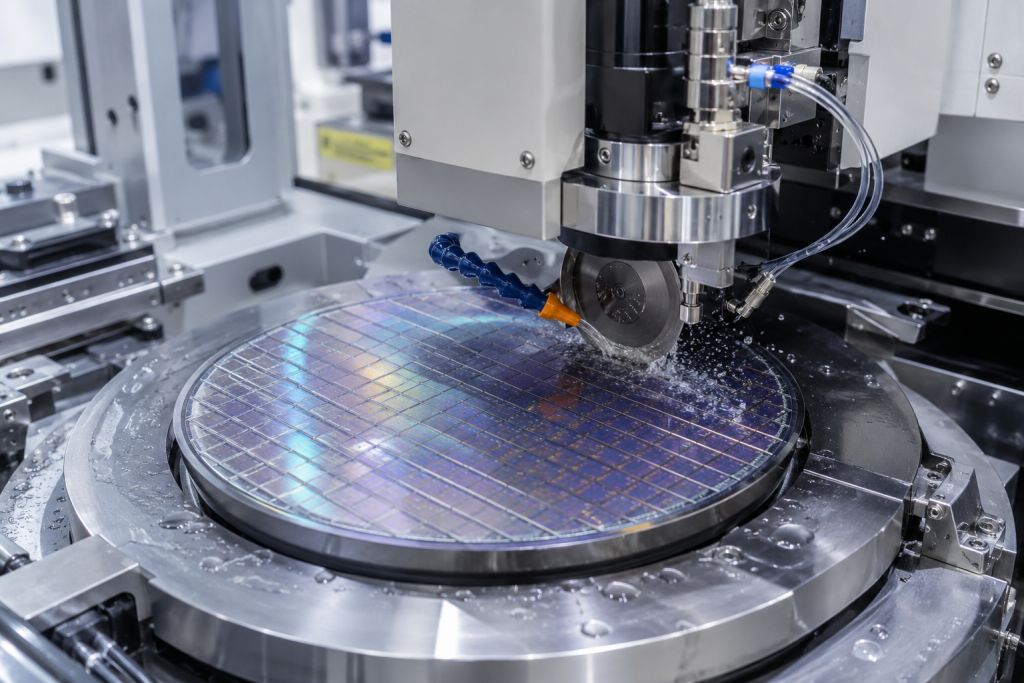
How Much Does a Wafer Dicing Machine Cost?
Most semiconductor equipment manufacturers do not publish fixed prices because each system is configured for a specific wafer size, material and production requirement. Public equipment marketplaces indicate that general-purpose new dicing systems may range from approximately USD 20,000 to USD 200,000, while used systems may range from around USD 10,000 to USD 80,000. However, fully automatic, dual-spindle and 300 mm semiconductor production systems can cost substantially more.
The following figures should therefore be treated as preliminary budget ranges rather than supplier quotations.
| Machine category | Typical application | Indicative price range |
|---|---|---|
| Manual or basic benchtop dicing saw | Research, sampling and small substrates | USD 20,000–80,000 |
| Used semi-automatic dicing machine | Laboratory and low-volume production | USD 30,000–120,000 |
| New semi-automatic single-spindle machine | 150 mm or 200 mm wafer processing | USD 80,000–250,000 |
| Fully automatic 200 mm dicing machine | IC, MEMS and package production | USD 200,000–600,000 |
| Dual-spindle production dicing saw | High-throughput semiconductor production | USD 400,000–1,000,000+ |
| Fully automatic 300 mm system | High-volume wafer manufacturing | USD 600,000–1,500,000+ |
| Laser grooving or specialized dicing system | Low-k, thin wafers and advanced packaging | USD 800,000–2,000,000+ |
Actual pricing can vary significantly according to the country of installation, software options, handling system, metrology package, service agreement and acceptance requirements.
What Determines the Price of a Wafer Dicing Machine?
1. Maximum Wafer and Workpiece Size
Wafer size is one of the first specifications affecting machine price.
Common configurations include:
- 100 mm wafers
- 150 mm wafers
- 200 mm wafers
- 300 mm wafers
- Rectangular ceramic or glass substrates
- Panel-level packaging substrates
A machine designed for 300 mm wafers requires a larger cutting range, chuck table, frame handling mechanism and more rigid motion platform than a machine designed for 150 mm wafers.
For example, DISCO offers semi-automatic systems for 150 mm, 200 mm and 300 mm workpieces. Its DAD3361 is designed for workpieces up to 300 mm and uses a single spindle, while the DFD6361 is a fully automatic, facing dual-spindle system for 300 mm wafers.
A buyer should not select wafer capacity based only on the current project. Future wafer formats, tape-frame dimensions and substrate panels should also be considered.
2. Manual, Semi-Automatic or Fully Automatic Operation
The automation level has a major effect on both the purchase price and labor cost.
Manual or basic systems
Manual systems are commonly used for:
- University laboratories
- Process development
- Material evaluation
- Prototype production
- Small batch cutting
The operator may need to load the workpiece, align the cutting street, set the blade position and unload the diced wafer manually.
These machines have a lower initial cost but depend heavily on operator skill.
Semi-automatic systems
Semi-automatic machines typically provide:
- Programmable cutting recipes
- Motorized X, Y, Z and theta axes
- Microscope or camera alignment
- Automatic cutting sequences
- Blade monitoring
- Wafer mapping options
They are suitable for research centers, pilot lines and low-to-medium-volume production.
Fully automatic systems
A fully automatic dicing saw may integrate:
- Cassette loading
- Automatic wafer transfer
- Pre-alignment
- Pattern recognition
- Automatic cutting
- Wafer cleaning
- Spin drying
- Cassette return
- Recipe and production data management
For example, the DISCO DFD6240 combines automatic wafer handling, cutting, cleaning and drying in a compact single-spindle platform. Its condition-monitoring functions also support equipment inspection and process management.
Full automation increases the purchase price but can reduce handling errors, contamination and labor requirements.
3. Single-Spindle or Dual-Spindle Configuration
A single-spindle dicing saw uses one blade to complete the cutting process.
It is often sufficient for:
- Research projects
- Lower production volumes
- Standard silicon wafers
- Applications with relatively simple cut patterns
A dual-spindle system can perform two cuts simultaneously or use different blades for step cutting, bevel cutting or package singulation.
The main benefits include:
- Högre genomströmning
- Reduced cycle time
- Two-step cutting capability
- Greater flexibility for complex packages
- Improved productivity for high-volume production
DISCO’s DFD6342 is a fully automatic dual-spindle machine for 200 mm wafers. Depending on the spindle option, it supports spindle speeds of up to 60,000 or 80,000 revolutions per minute and cutting speeds of up to 1,000 mm/s.
Dual-spindle machines normally cost more because they require additional spindle hardware, motion control, blade monitoring, water control and process calibration.
4. Spindle Power and Speed
The correct spindle depends on the material being cut.
A high-speed spindle is generally used with thin blades and relatively brittle semiconductor materials. A high-torque spindle may be necessary for thick substrates, ceramics or difficult-to-machine materials.
Important spindle parameters include:
- Rated power
- Rated torque
- Maximum rotational speed
- Radial runout
- Cooling method
- Blade diameter
- Blade flange compatibility
- Automatic blade setup
- Broken-blade detection
The DISCO DAD3351, for example, includes a 1.8 kW spindle as standard and can be configured with a 2.2 kW high-torque spindle for harder materials such as ceramics.
Selecting insufficient spindle power may result in unstable feed speed, blade loading, excessive chipping or spindle overload. However, purchasing an unnecessarily powerful spindle can increase equipment and maintenance costs without improving the process.
5. Material Compatibility
A machine designed only for standard silicon wafer dicing may not be suitable for every substrate.
Potential materials include:
- Kisel
- Kiselkarbid
- Safir
- Gallium arsenide
- Gallium nitride
- Glass
- Kvarts
- Alumina ceramic
- Aluminum nitride
- LTCC substrates
- Molded semiconductor packages
- PCB and package substrates
Hard and brittle materials often require:
- High-rigidity spindles
- Specialized diamond blades
- Lower feed speeds
- More stable cooling-water control
- Dressing procedures
- Improved debris removal
- Stronger chuck-table support
- Enhanced edge inspection
Before purchasing a machine, the buyer should conduct sample cutting tests using the actual substrate, thickness, tape and blade combination.
How Much Accuracy Does a Dicing Machine Need?
Machine accuracy should not be evaluated from a single number. A system can have excellent positioning resolution while still producing poor die quality because of blade vibration, spindle runout, thermal drift or incorrect process parameters.
Index positioning accuracy
Index positioning accuracy describes how accurately the machine moves from one cutting street to the next.
As examples of commercial equipment specifications:
- The DISCO DAD3221 lists index positioning accuracy of 0.005 mm over 160 mm.
- The DISCO DFD6342 lists positioning accuracy within 0.002 mm over 210 mm.
- The DISCO DFD6361 lists positioning accuracy within 0.002 mm over 310 mm.
Higher positioning accuracy is particularly important for:
- Narrow dicing streets
- Small die dimensions
- MEMS-enheter
- Optiska komponenter
- High-density advanced packages
- Multi-pass or step-cut processes
Axis repeatability
Repeatability describes whether the machine can return to the same position consistently.
A machine may have a very small command resolution but still show poorer practical repeatability. Buyers should therefore distinguish between:
- Command resolution
- Scale resolution
- Positioning accuracy
- Repeterbarhet
- Single-pitch error
- Accuracy across the entire cutting range
Kerf width
Kerf width is the amount of material removed by the blade.
It is affected by:
- Blade thickness
- Blade exposure
- Spindle runout
- Blade vibration
- Feed speed
- Material properties
- Slitage på bladet
- Cooling-water condition
The machine should maintain a stable kerf without cutting into the active die area.
Kantflisning
Chipping is frequently more important than theoretical machine resolution.
Typical inspection items include:
- Front-side chipping
- Back-side chipping
- Maximum chip size
- Continuous edge damage
- Corner cracking
- Delamination
- Burr formation
- Die strength after cutting
The acceptable chipping specification depends on the die design, device structure, substrate thickness and downstream packaging process.
Cut-depth accuracy
Cut-depth control is critical for:
- Half cutting
- Step cutting
- Package singulation
- Dicing before grinding
- Thick ceramic substrates
- Multi-layer materials
The quotation should specify whether the machine includes:
- Non-contact blade setup
- Contact setup
- Automatic height measurement
- Chuck-table height compensation
- Blade wear compensation
- Automatic recipe correction
Vision Alignment and Pattern Recognition
The camera and alignment system can represent a significant portion of the machine price.
Important options include:
- Manual microscope alignment
- Automatic street recognition
- Pattern matching
- Multiple alignment points
- Wafer-map integration
- Backside alignment
- Infrared alignment
- Low-contrast pattern detection
- Automatic theta correction
- Alignment for multiple workpieces on one frame
Automatic alignment is valuable when processing patterned wafers, but it may provide limited benefit for blank ceramic or glass substrates.
The buyer should provide representative wafer images to verify whether the vision system can identify the actual alignment marks and dicing streets.
Wafer Handling, Cleaning and Drying Options
The cutting unit is only one part of a production system.
A complete automatic line may include:
- Wafer cassette station
- Frame cassette station
- FOUP interface
- Robot transfer arm
- Pre-alignment station
- Wafer mapping
- Cleaning station
- Spin-rinse dryer
- CO₂ water injection
- Water recycling
- Waste filtration
- Tape-frame inspection
- Automatic blade changer
ACCRETECH’s AD3000T-PLUS, for example, is a fully automatic 300 mm dicing system that can be configured with an automatic blade exchange system. The company also offers systems supporting both FOUP wafer handling and conventional frame handling.
Each option can increase the equipment price, but it may also reduce operator intervention and improve line productivity.
New Versus Used Wafer Dicing Machines
Used equipment can reduce the initial investment, especially for laboratories and pilot production.
However, a used machine should be evaluated carefully.
Advantages of used equipment
- Lower purchase price
- Shorter delivery time
- Proven process platform
- Availability of mature recipes
- Suitable for low-volume production
Main risks
- Unknown spindle condition
- Obsolete control computer
- Limited software support
- Unavailable spare parts
- Worn ball screws or guideways
- Corroded water system
- Damaged chuck table
- Missing accessories
- Limited installation support
- No process warranty
Many used DISCO dicing-saw listings do not publish a fixed selling price and instead require the buyer to request a quotation. This reflects the importance of equipment condition, refurbishment scope, installation and included accessories.
Before buying a used system, request:
- Machine serial number and manufacturing year
- Operating-hour records
- Spindle vibration and runout report
- Axis accuracy report
- Cutting test results
- Current software and operating-system version
- List of included chucks, flanges and accessories
- Preventive-maintenance history
- Photographs of the water and electrical systems
- Installation and training scope
A low-priced machine may become expensive if the spindle, computer, control board or motion system must be replaced.
Total Cost of Ownership
The machine purchase price is only part of the total investment.
A practical total-cost calculation should include the following categories.
Initial capital costs
- Machine purchase
- Optional hardware
- Software licenses
- Shipping
- Insurance
- Import duties
- Rigging
- Installation
- Calibration
- Acceptance testing
- Operator training
Facility preparation
- Electrical connection
- Compressed air
- Vacuum supply
- Exhaust
- Drainage
- Deionized water
- Water chiller
- CO₂ injection
- Temperature control
- Cleanroom modifications
- Equipment foundation
Consumables
- Dicing blades
- Blade flanges
- Dicing tape
- Tape frames
- Cleaning chemicals
- Dressing boards
- Filters
- Nozzles
- DI water
- Coolant additives
Maintenance expenses
- Spindle maintenance
- Chuck-table resurfacing
- Axis calibration
- Camera calibration
- Water-system cleaning
- Preventive-maintenance visits
- Service contracts
- Replacement sensors
- Pumps and valves
- Control-computer replacement
Process-related costs
- Waferbrott
- Kantflisning
- Blade breakage
- Unplanned downtime
- Operator labor
- Recipe development
- Qualification wafers
- Scrap during process transfer
- Yield loss caused by unstable cutting
Example of a Five-Year Cost Calculation
Consider a semi-automatic production machine with the following estimated costs:
| Cost item | Estimated amount |
|---|---|
| Machine and options | USD 180,000 |
| Shipping and installation | USD 25,000 |
| Facility preparation | USD 30,000 |
| Chiller, water and peripheral equipment | USD 20,000 |
| Training and process qualification | USD 5,000 |
| Initial investment | USD 260,000 |
Estimated annual operating expenses:
| Annual expense | Estimated amount |
|---|---|
| Blades, tape and consumables | USD 35,000 |
| Maintenance and spare parts | USD 18,000 |
| Water, electricity and compressed air | USD 7,000 |
| Downtime and process-related losses | USD 25,000 |
| Annual operating cost | USD 85,000 |
The estimated five-year ownership cost would be:
USD 260,000 + USD 85,000 × 5 = USD 685,000
This example shows why a machine with a lower purchase price is not always the least expensive choice. Better process stability, faster setup and lower yield loss can provide a greater financial benefit than a small reduction in initial equipment cost.
How to Compare Supplier Quotations
Do not compare quotations based only on the machine model and headline price.
Create a comparison table covering:
| Comparison item | Supplier A | Supplier B | Supplier C |
|---|---|---|---|
| Maximum wafer size | |||
| Maximum substrate thickness | |||
| Automation level | |||
| Number of spindles | |||
| Spindle power | |||
| Spindle speed range | |||
| Positioning accuracy | |||
| Repeterbarhet | |||
| Automatic alignment | |||
| Rengöring och torkning | |||
| Blade detection | |||
| Wafer mapping | |||
| Installation included | |||
| Training included | |||
| Warranty period | |||
| Spare-parts availability | |||
| Estimated delivery time | |||
| Acceptance test | |||
| Total installed price |
The supplier should clearly identify which features are standard and which are optional.
Information Required for an Accurate Quotation
A buyer should provide the following information when requesting a wafer dicing machine quotation.
Workpiece information
- Material
- Wafer or substrate diameter
- Length and width for rectangular substrates
- Tjocklek
- Surface condition
- Wafer bow and warp
- Tape-frame dimensions
- Patterned or unpatterned surface
Cutting requirements
- Die dimensions
- Dicing-street width
- Required kerf width
- Full cut or half cut
- Cut depth
- Number of passes
- Step-cut requirements
- Maximum front-side chipping
- Maximum back-side chipping
- Required edge quality
Production requirements
- Wafers per hour
- Wafers per day
- Number of product types
- Recipe-change frequency
- Required automation level
- Operator availability
- Factory integration requirements
Quality and inspection requirements
- Alignment tolerance
- Positioning tolerance
- Edge inspection method
- Die-strength requirement
- Particle-cleanliness requirement
- Traceability
- Data logging
- Statistical process control
- Factory acceptance testing
Providing actual samples and drawings is the most reliable way to obtain a technically valid quotation.
When Is a Higher-Priced Machine Justified?
A more expensive wafer dicing machine may be justified when the process requires:
- 300 mm wafer handling
- Narrow dicing streets
- High-value wafers
- Thin or warped wafers
- SiC, sapphire or ceramic cutting
- Dual-spindle processing
- High-volume production
- Automatic cassette handling
- Wafer cleaning and drying
- Automatic blade exchange
- Advanced pattern recognition
- Detailed traceability
- Low downtime
- Strict edge-chipping limits
For low-volume research work, many of these functions may not provide a reasonable return on investment.
The best machine is not necessarily the model with the highest specification. It is the machine that meets the required cut quality, throughput and reliability without adding unnecessary complexity.
Final Purchasing Recommendations
Before selecting a wafer dicing machine:
- Define the material, wafer size and thickness.
- Establish measurable chipping and kerf requirements.
- Calculate current and future production volume.
- Decide whether manual, semi-automatic or fully automatic handling is required.
- Compare single-spindle and dual-spindle cycle times.
- Conduct a cutting trial using actual samples.
- Inspect the diced edges and measure die strength.
- Confirm the availability of blades, spare parts and technical service.
- Calculate installation and five-year operating costs.
- Include process acceptance criteria in the purchase agreement.
A machine quotation should be based on the complete process rather than the equipment alone. Sending the supplier your wafer drawing, material, thickness, dicing-street width, edge-quality requirement and production target will result in a more accurate configuration and total-cost estimate.
Vanliga frågor och svar
What is the average price of a wafer dicing machine?
Basic and used systems may cost tens of thousands of US dollars. New semi-automatic systems may range from approximately USD 80,000 to USD 250,000, while fully automatic, dual-spindle and 300 mm systems may require investments of several hundred thousand dollars or more. Exact prices depend on configuration and are usually provided through a formal quotation.
Is a used wafer dicing machine suitable for production?
A used machine can be suitable for production when its spindle, motion system, chuck table, control system and water system have been inspected and qualified. Spare-parts availability and technical support should be confirmed before purchase.
Is a dual-spindle dicing machine always better?
No. Dual spindles can improve throughput and support complex cutting processes, but they also increase capital cost and maintenance requirements. A single-spindle machine may be more economical for research, sampling and lower-volume production.
What accuracy should a wafer dicing machine have?
The required accuracy depends on the dicing-street width, die size and device design. Buyers should evaluate positioning accuracy, repeatability, spindle runout, kerf stability and actual edge chipping rather than relying on one resolution value.
Which specifications have the greatest effect on price?
The main factors are wafer size, automation level, number of spindles, spindle power, alignment system, wafer handling, cleaning and drying, material compatibility and process-monitoring functions.
What supporting equipment is required?
A dicing machine may require a water chiller, deionized-water system, filtration, compressed air, vacuum, exhaust, CO₂ injection, tape-mounting equipment, cleaning equipment and inspection tools.
Should buyers choose blade dicing or laser dicing?
Blade dicing is widely used for silicon, ceramics, glass and semiconductor packages. Laser processing may be preferred for narrow streets, low-k layers, thin wafers or specialized materials. The choice should be based on cut quality, throughput, heat-affected zone, die strength and total processing cost.
How can buyers obtain an accurate machine quotation?
Provide the supplier with the wafer material, diameter, thickness, die dimensions, street width, maximum chipping, throughput target, automation requirement and sample wafers. A cutting test should be completed before final machine selection.
SEO Title: Wafer Dicing Machine Price Guide: Configuration, Accuracy and Total Cost
Meta Description: Compare wafer dicing machine prices, configurations, accuracy, automation, operating expenses and total ownership costs before requesting a quotation.
Suggested URL: /wafer-dicing-machine-price-guide/
TAGS: wafer dicing machine price,dicing saw cost,wafer dicing equipment,automatic dicing saw,semiconductor dicing machine,300mm wafer dicing machine,dual spindle dicing saw,wafer cutting equipment,dicing machine configuration,wafer dicing accuracy