
The semiconductor industry has experienced a continuous drive for higher performance, greater integration, and lower cost per unit. One of the key milestones in this evolution has been the transition from 200mm wafers to 300mm wafers. Compared with smaller wafers, 300mm wafers allow manufacturers to produce significantly more chips per wafer, reducing manufacturing cost per die and improving overall productivity. However, increasing wafer diameter introduces a series of technical challenges across all manufacturing processes, including lithography, etching, deposition, wafer handling, thermal processing, and metrology.
These challenges are not merely a matter of scaling equipment; they require precise engineering, process optimization, and careful integration of multiple technologies. This article provides an in-depth overview of the technical challenges in 300mm wafer production, focusing on equipment limitations, process difficulties, and strategies used in the semiconductor industry to maintain high yield and device reliability.
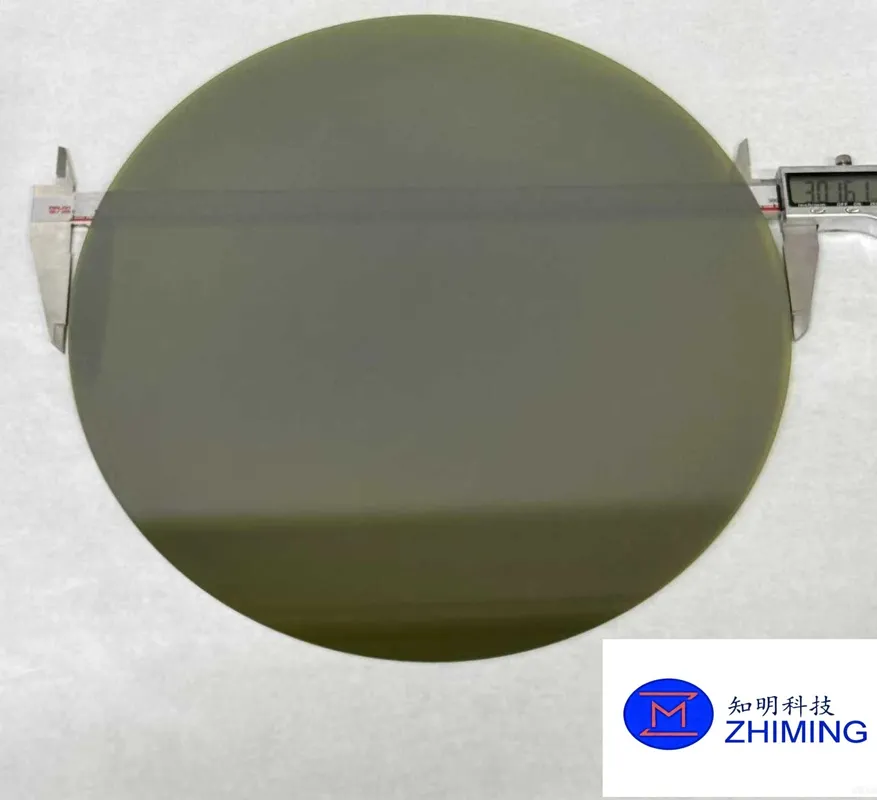
1. Equipment Scaling and Precision
1.1 Lithography Challenges
Lithography remains the most critical step in semiconductor manufacturing. As wafer size increases to 300mm, the lithography equipment must maintain nanometer-scale pattern fidelity across a much larger surface. Key challenges include:
- Stage movement accuracy: The wafer stage must move smoothly without vibration, ensuring precise pattern placement across the entire 300mm diameter.
- Uniform exposure: Optical projection systems must maintain consistent intensity and focus, preventing pattern distortion at wafer edges.
- Alignment precision: Multi-layer devices require precise interlayer alignment, which becomes more challenging on larger wafers.
Advanced lithography tools, including Extreme Ultraviolet (EUV) lithography, rely on highly engineered optics and real-time feedback systems to address these challenges.
1.2 Etching and Deposition Equipment
Etching and thin-film deposition also face scaling challenges:
- Etching uniformity: Plasma etching chambers must provide uniform ion density across a larger wafer, avoiding over-etching at edges.
- Thin-film uniformity: Chemical vapor deposition (CVD) and physical vapor deposition (PVD) tools must deliver consistent thickness and composition across the entire wafer.
- Defect minimization: Larger wafers have a higher probability of defects, making process control more critical.
2. Wafer Handling and Mechanical Stress
Handling 300mm wafers introduces mechanical and automation challenges due to increased mass and fragility:
- Automated wafer transport: Robot arms and wafer carriers must be precisely calibrated to avoid cracks, scratches, or warping.
- Vibration isolation: Larger wafers are more susceptible to mechanical stress; equipment must minimize vibration during transport and processing.
- Load distribution: Pressure applied during bonding, CMP, or deposition must be uniform across the entire wafer.
Failing to address these issues can lead to reduced wafer yield and increased production costs.
3. Thermal and Chemical Process Challenges
3.1 Thermal Uniformity
300mm wafers require precise temperature control in thermal processes such as rapid thermal processing (RTP) and furnace annealing. Temperature gradients can cause:
- Warping and mechanical stress
- Variations in dopant distribution
- Defects in high-density device areas
Advanced thermal control systems are essential to maintain uniformity across the wafer and avoid yield loss.
3.2 Chemical Processes
Scaling chemical processes such as CMP, CVD, and PVD introduces additional complexity:
- Slurry or gas distribution must be uniform across 300mm surfaces.
- Edge effects must be minimized to prevent non-uniform material removal or deposition.
- Contamination control becomes more challenging because larger wafers have more surface area exposed to potential particles.
4. Metrology and Defect Detection
Inspection and metrology are critical for detecting defects and ensuring wafer quality:
- Larger wafers require equipment capable of scanning quickly without compromising resolution.
- Non-uniform defect distribution on larger surfaces demands advanced imaging and data analysis algorithms.
- Inline metrology systems provide real-time feedback, enabling corrective actions before defects propagate through multiple process steps.
Without precise metrology, the advantages of 300mm wafers in terms of yield and cost reduction cannot be fully realized.
5. Cost and Infrastructure Considerations
Transitioning to 300mm wafers also requires significant capital investment and infrastructure planning:
- Larger and more expensive equipment is required for lithography, deposition, etching, and inspection.
- Cleanroom design must accommodate larger tools, with more stringent vibration, temperature, and contamination control.
- Operational complexity increases, including maintenance, calibration, and operator training.
While the per-die cost decreases due to more chips per wafer, the upfront capital expenditure and operational requirements are substantial, requiring careful planning by semiconductor fabs.
6. Industry Strategies and Future Trends
The semiconductor industry has developed several strategies to address 300mm wafer challenges:
- Automation and AI-assisted process control: Reduces human error and improves yield through real-time monitoring.
- Advanced bonding and low-temperature deposition: Minimizes thermal stress on larger wafers.
- Enhanced metrology and inline inspection systems: Detects defects early to prevent yield loss.
- Exploration of 450mm wafers: Although adoption is limited, this represents the next potential evolution for cost and throughput advantages.
Continuous innovation in equipment design, process control, and automation is essential to fully leverage the benefits of 300mm wafers.
결론
Producing 300mm wafers involves far more than simply scaling up existing equipment. It requires a coordinated approach across lithography, etching, deposition, wafer handling, thermal processing, metrology, and infrastructure. While the challenges are significant, overcoming them enables semiconductor manufacturers to achieve higher throughput, lower per-die cost, and improved device performance.
As the semiconductor industry continues to push toward advanced nodes, high-density integration, and 3D IC architectures, innovations in 300mm wafer production equipment will remain a cornerstone of technological progress and competitive advantage.